

What a Long, Strange Trip
Setting the Stage
We didn’t know it at the time, but 1996 was a pivotal year in U.S. and world history. Those of us in our twenties were debating the merits of The Fugees remake of Killing me Softly, meanwhile the cool kids were listening to Jay Z’s debut album. We were watching Will Smith save the world on Independence Day, while Tom Cruise began his interminable career saving the day in the first of the endless Mission Impossible franchise.
Meanwhile, FoxNoise launched its “fair and balanced” network on the rising tide of a right-wing movement that was transforming neoliberal conservatism. President Clinton managed to get re-elected despite a massive media campaign against him. Hillary participated in her first “scandal” hearings on Whitewater. We didn’t know it at the time, but Hillary Clinton pseudo-scandals will become almost as common as Mission Impossible movies.
This was the height of the Neoliberal Era. Under Clinton’s leadership, with a nod to the rising Neocons, we ended welfare as we know it and ushered in the Internet by deregulating communications. The economy was finally something we could call “booming”…especially if you were among the wealthy for whom economic inequality was the biggest boondoggle. The Crack Wars were largely behind us, but the Gangsta lifestyle came to a head with the assassination of Tupac Shakur. In more ways than one, 1996 set the stage for where we are today.
But this is about me!
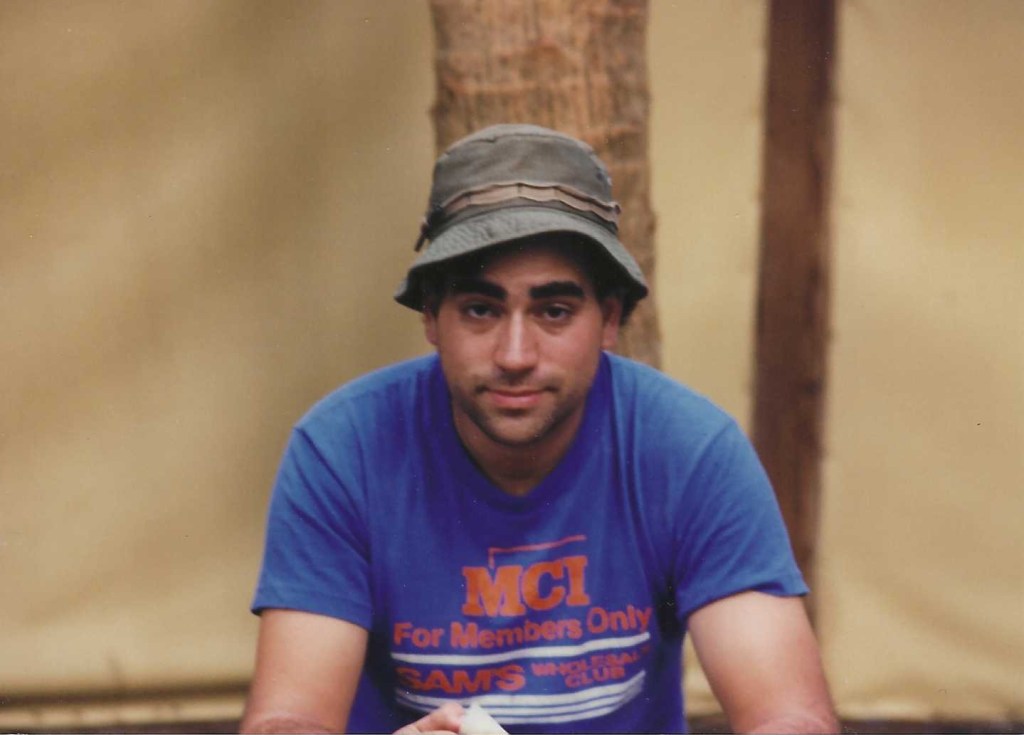
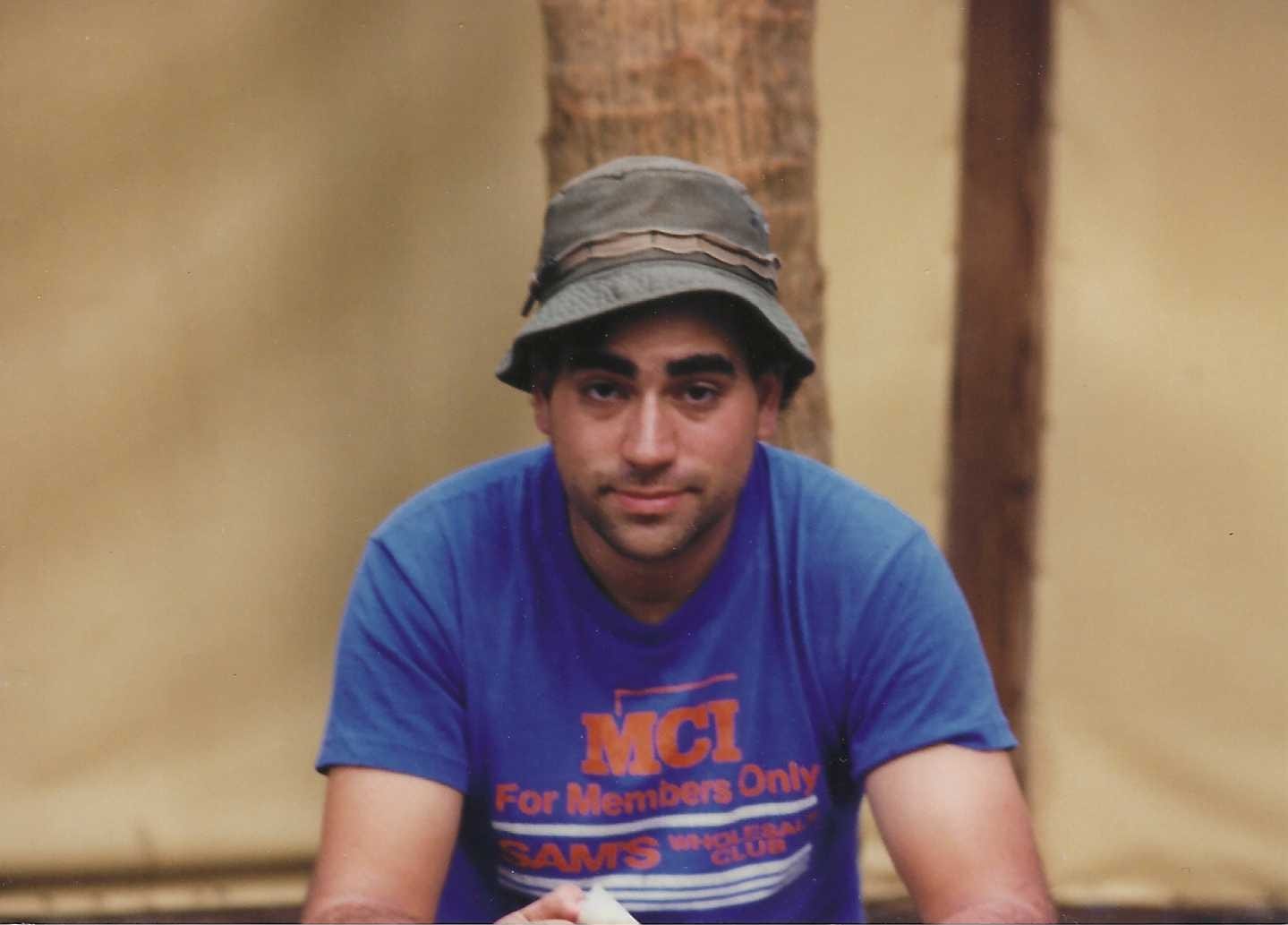
Whereas things seemed to be picking up in the world around me, I entered 1996 in a bit of a rut. I was a therapeutic counselor and teacher in a wilderness program at the time. My job was intensive. By 1996 I had spent over two years living in the Everglades with delinquent young men, many of whom were captives of the Gangsta Lifestyle noted above, believing themselves to be the legacy of Tupac or Biggie. I lived with these young men twenty-four hours a day for at least five days1 at a time providing Reality Therapy, Experiential Education, and constant attention. I loved my job, but I was done with living in a tent and sharing my every moment with teenage boys. However, my prospects for advancement into a more independent supervisory roll seemed to have stalled as I ushered in the new year.
As a therapist, however, I counseled myself. I resolved to go to graduate school and start what I thought would be the long process of getting my Ph.D. and taking up the mantel of an academic. I was planning on trading in my swamp boots for tweed elbow patches. But what to study? I had a bachelor’s degree in social science education. Looking back, however, I hated my education classes! My professional background was in therapeutic counseling. Perhaps a degree in psychology? On the other hand, history was always my first love. Damn…I should have majored in history!
While I was trying to figure it out, opportunity finally came my way. My new supervisor talked to me about moving up into the supervisory position that I had been seeking. When I told him that I was planning on pursuing graduate school and may not be staying at camp, he sweetened the pot. I would become a Master Counselor, responsible for supervising groups, training counselors, and dealing with crisis intervention. My supervisor would guarantee my time off to go to school. Eventually, I would transfer to a new roll in which I was at camp for three days a week and in the “real world” for two helping our clients transition from camp life to life “on the outs.”
It was an intriguing offer. One that I found attractive. One of the biggest conflicts I had as a counselor at camp was that we would take these boys from their homes,2 often urban, low-income homes and respective communities, and work with them in camp. After months of intensive and constant therapy and education often hardened young men became exuberant boys and teens, playing frisbee, romping in the woods, aspiring to “normal” lives. Many of these troubled teens evolved into reliable, hard-working, even gregarious and good-humored young men.3
Then we sent them home. Many showed promise “on the outs,” going to school, getting jobs, finding appropriate friends. At least at first. Then most of them fell back into the same behaviors that got them sent to us in the first place. There were so many heartbreaks. These were great kids when they graduated from our program. Where did we lose them? Were they just “faking it” until they “made it?” Were we duped?
Or were these kids simply psychologically deficient? Perhaps there was just something wrong with their brains that they just couldn’t make appropriate decisions. Maybe they were slaves to their impulses.
I found both prospects difficult to believe. How was it that a young man was perfectly sane when in the middle of a swamp with me and my peers, then turned to drugs, violence, and crime when they went home?
I couldn’t help but think that if you take a kid who was adaptive to environment A, but maladaptive to environment B, maybe the problem isn’t the kid. Maybe the problem is the environment. From there it wasn’t hard to analyze the differences between environment A and B. In environment A, their needs were being met. They were spending every day with a caring and attentive adult who may have annoyed the shit out of them by insisting that their shirts were clean and tucked in, and their hair combed, but still cared enough to put their own lives on hold to live out in the woods with them.
Environment B? Well. That was different. These were not needs fulfilling environments. They were often abusive environments. The gangs were there. The drugs were there. Illegitimate Opportunity Structures beckoned them.4 There were no supportive groups willing to stop and help them work through their problems. Rather, there was the same peer groups that encouraged their maladaptive behavior in the first place.
For years I wondered what it would take to maximize the prospects for success between the healthy environment at camp and the toxic environments at home or in the neighborhood? My future career would be dedicated to answering this very question. At least that’s what I thought.
It was then that I decided to major in Sociology. I enrolled in the Sociology Graduate Program at the University of South Florida…
…GO BULLS!
Socialized into Sociology
Sociology is an addictive perspective. Prior to my graduate work, my only experience was an Introduction to Sociology class in my first year of college, then a Social Problems course in which the professor put on a video for most of the class and left the room. He would return just in time to turn the VHS off, talk to us about the problem, inform us that we were all much too stupid to ever solve this problem, then sent us home.
Not an auspicious beginning to my academic career.
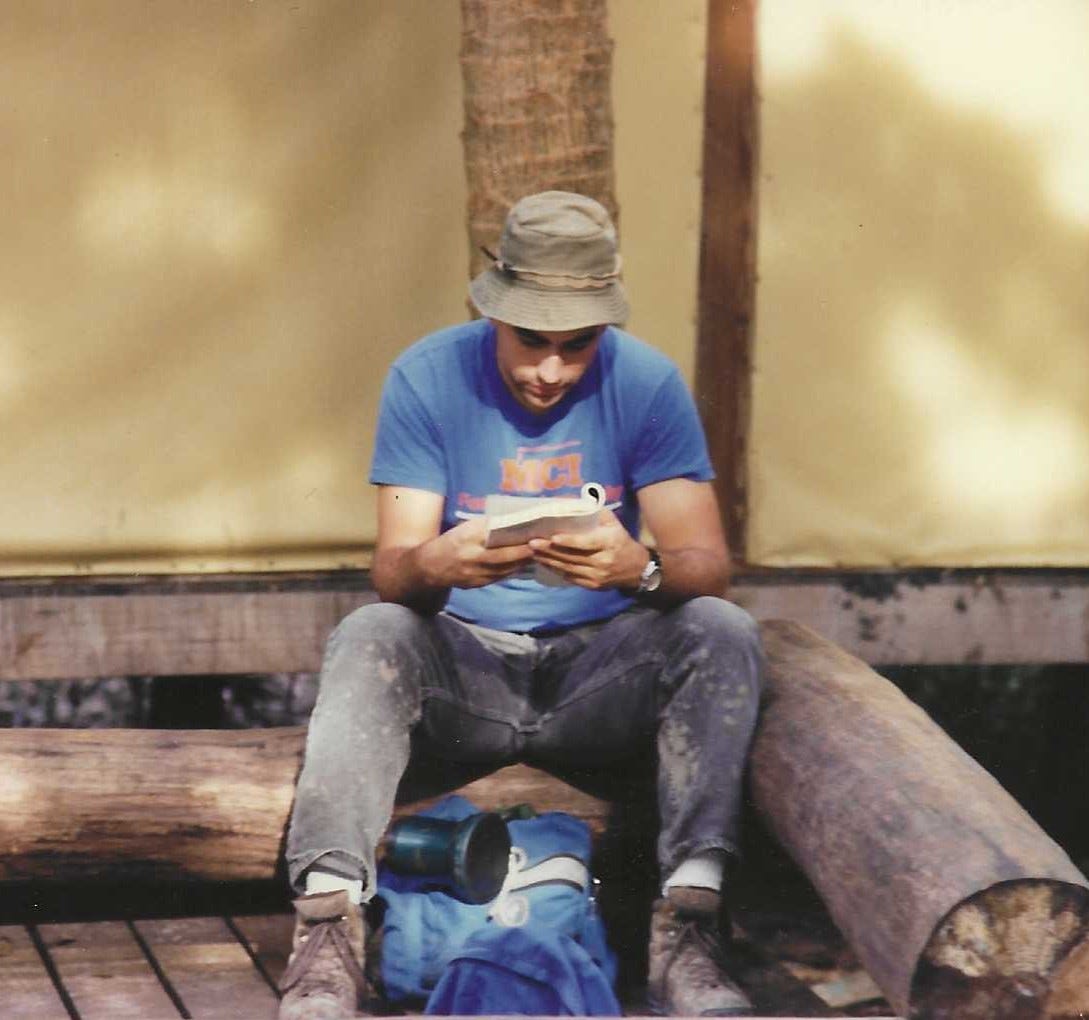
Thanks to my masterful teachers at USF, including Dr. Laurel Graham, Dr. Jennifer Friedman, and Dr. Donileen Loseke, it wasn’t long before I was imbued with the Sociological Imagination. This was the first time I was required to read Marx…like the stuff that Marx actually wrote. What a surprise that was. I also became versed in Durkheim, and Weber, of course. But most of my studies revolved around Symbolic Interactionism and Social Constructionism, and a lot of Foucault. I took to these frames readily and reveled in every paper I wrote and every graduate Socratic discussion I engaged in. I had great teachers and brilliant peers with whom to bounce ideas around. I would carry my books in my backpack as I did my rounds through the swamps of camp, scratching out any spare moment to read the foundational works of my new field.
I had never felt more intellectually alive.
Then I started to get pressure to choose a thesis topic. But how could I choose? There was so much out there. Also, any topic I chose would have to revolve around my career. I was guaranteed my two days off a week, but the rest of my time I was in the middle of the Everglades dealing with dozens of delinquent kids and their counselors…who weren’t the most well-balanced set of folks either. Initially I wanted to do research into Groupness, or group cohesion. I discovered that this was played out after about two hundred years of study and theorizing.
I considered looking into the resocialization process associated with total institutions. After all, camp was effectively such a totalizing environment. However, I had little access to observe young men outside of the camp environment. At some point in my career, I would gather that data and do the requisite analysis, but it was out of reach while working on my degree.
Then the decision was cast upon me. One day I returned from time-off and was intercepted by the Social Services Coordinator. It turns out, I missed a supervisory meeting. The topic of that meeting was masturbation. The kids were doing a lot of it. By some metric that still confounds me, it was decided that there was way too much masturbation going on and someone needed to stop it. It was unanimously decided that I was best suited for that job. Toward that end, I was conscripted to develop a comprehensive sex education program and deliver that program to the young men at camp. Of course, part of this education was the “appropriate time and place to gratify oneself…and that wasn’t camp.”
That’s what I get for missing a meeting!
I set to work immediately. I went into the program files and archives to find any protocols for addressing sex, sexuality, and sex education at camp. I found nothing. Not a single paragraph of policy. I thought it was strange that we had a program focused on teenage boys, always assumed to be in a phase of hyper-sexualization and perpetual sexual excitation due to their “raging hormones,” but had no standard operating procedure for dealing with this. It was as if these young men were expected to develop a healthy and appropriate sense of sexual self, silently, independently, and with no feedback from staff.
A thesis topic was born!
I completed my ethnographic thesis after three years of Participant Observation research. It was called Polymorphous Techniques of Power: Governing Sexuality in a Therapeutic Wilderness Center. This research was the genesis of my love for the Sociology of Knowledge. After all, that’s what I was doing with my sex ed curriculum, creating knowledge about what constituted “appropriate sexuality.” Sociology of knowledge offered a perfect synthesis for my sociological imagination and my passion for history.
Crossroads
When I began this academic journey, it was toward practical, applied application. I wanted to make a real difference in the lives of young men and their families. I enjoyed research, but I did not see it as my career path. I wanted to do something with my knowledge to directly make a difference in the world. Camp would be my vehicle for doing that.
But it wouldn’t last. As I was wrapping up my research, the program to which I had dedicated six years of my life, and my focus for the future, was changing. The foundation governing the program decided it needed to focus on finding revenue streams. To attract these revenue streams, it became necessary to change the program standards to conform to the institutional norms of the funding agencies. Most distressing to me was the growing emphasis on “diagnose and dose,” in order to justify billing Medicaid. A psychiatrist was brought in on consult to supervise this new protocol. He and I didn’t see eye to eye.
It was soon clear that the old gunslingers like myself no longer had a place in this program. At one point the camp director pulled me aside to let me know that the camp was going a different direction with regard to the re-entry project I was originally promised. By going a different direction, she meant that the program was not going to prioritize supervised re-entry. I responded to this news by saying, “we’re really not in this for the kids anymore. Are we?”
She was silent.
It was time for me to leave.
I ushered in the new Millennium by ending my career, ending a long-term relationship, and backpacking into the Big Cypress Swamp in an attempt to clear my head. Where do I go from here? My professors had all offered to give me great recommendations toward a doctorate program. That was certainly a tempting direction. But I was tired. I was turning thirty. I was physically exhausted as well as emotionally spent.
When the money in my savings was gone I decided to return to my original goal—teaching. I found a job teaching a self-contained class for Emotionally Handicapped middle school students. That was a lesson in institutional friction. I knew this population well and had the skills to really make a difference for these kids. But I wasn’t allowed to. The institutional constraints of a public school made it difficult to effect any change at all.
I then found a job with a private school. I taught their high school. By this I mean I was the high school teacher. I taught every class, reading, language arts, math, science, social studies, and two electives every year. In exchange, I was underpaid with at best mediocre benefits. However, I had almost complete academic freedom…and that was the greatest appeal to me. I did that for eight years. This eight years went by like a tornado. In that time, I had a son, a failed relationship, I found the woman who would be my wife5, had a daughter, and a mortgage, and child support payments I couldn’t afford.
And right when I needed it most, Sociology came through for me. I was able to supplement our income after being hired as an adjunct professor for Edison State College, later Florida Southwestern State College, and then another gig at Florida Gulf Coast University. I taught Principles of Sociology, Contemporary Social Problems, and occasionally Race and Ethnic Relations.
I was also coming of my own politically at this time. I was a local environmental activist, the Vice Chair of the local Sierra Club group and the President of a local group called the Responsible Growth Management Coalition. When I wasn’t trying to save the trees, I was trying to save the humans by protesting two wars. I also tried to save public education by protesting the growing tide of standardization that had taken over the pedagogical discourse and corroded American education from the inside.
Consequently, I was steeped in the Sociological Imagination as a big part of my bread and butter. I was also a political activist. I was engaged in the political debates of my time and found that my background in sociology, emphasizing research, theory and empiricism was invaluable to understanding the changing world around me. Now, with two children, I had even greater incentive to change that world.
I manifest this drive to bring the sociological imagination to bear on contemporary issues by writing regular columns to the local paper. This lasted until I tried to publish an essay in which I dared to suggest that President Bush and Co. was lying about Iraq having weapons of mass destruction. My essay was impeccable, supported by unimpeachable empirical evidence. Every word would ultimately be validated.
It was never published.
And I found that my future essays were also not published—even the stuff that had nothing to do with the war.
But I still had things to say.
So, I started my own newsletter that I printed off myself, and also published online. It was called Agitate and had a pretty dedicated following for a bit.
That’s when I was introduced to this thing that I didn’t fully understand called blogging. I was slow to the whole computer craze. As the Internet was coming into its own, I was living in the wilderness reading under lantern light. So, I was behind on the technology. On the other hand, part of the reason I was hired at the private school mentioned above was because I assured my prospective boss that I was a whiz at computers. I wasn’t…but I was expected to be.
My learning curve had to be sharp.
In 2008, I started the first iteration of the Mad Sociologist Blog on a free WordPress site. This project has since evolved and is now one of Feedspot’s top sociology blogs. The Mad Sociologist Blog became my main outlet for exploring the sociological imagination and pursuing my political project. Sociology, and the knowledge that can be gleaned from a sociological lens always remained the priority of this project. In more than one instance, the commonsense notions I had embraced were challenged by my research into the essays I would post. One can see the last eighteen years of social and political evolution on my part by looking up the Mad Sociologist Blog.

This is the Sociologist I have Become
For a while it seemed that higher education was the direction that my career was leading me. I was making a name for myself at FSW and FGCU. My classes were always full, and my ratings were always high. My deans expressed a desire to see me in a full-time professorship, an aspiration that would be much easier to satisfy if I had a Ph.D. So, I resolved to get my Ph.D.
In 2008.
Just as the rug was pulled out of the economy and from under me and my family. By the time our lives stabilized, any prospect of returning for a terminal degree no longer made sense. The money I would spend, I would never get back. Pursuing a Ph.D at that point would have been a very expensive vanity.
Which was fine. I was teaching upper-level classes at a local high school and teaching sociology four nights a week.
I was also working on a theoretical project I call Democracy is of the Streets, and another long-term project I call Teaching Heresies. I have notebooks full of research and diagrams. All I needed was the time to put all of this work together. Time I certainly would not have if I returned to school forced to follow the curriculum.
A Ph.D was not in the cards for me.
I did, however, get a gig teaching AICE Sociology in a local high school. Meanwhile, the ABA center my wife started, ABA Results, took off. The resulting financial stability gave me the opportunity to leave my adjunct positions and focus on one job and put some time into my private academic work. Financial independence also allowed me to take a principled stand when I came to school one morning and found that my classroom library was removed from my shelves. This was the culmination of my activism for academic freedom and the rights of my LGBTQ+ students to be treated with basic human dignity.6 I decided that I could better serve the cause of academic freedom if I were not constrained by the ludicrous demands of my job. My career in formal education had come to an end.
My love for sociology, however, has never abated.
This love for the discipline, and the lens by which I have learned to see the world, is now the bedrock of the literary work that I can now dedicate my life. When I taught this discipline, I told my students that sociology is the study of human freedom. Now, in the Free State of Florida, the Republican Party has decided that sociology is too dangerous a field of study in the face of their authoritarian pretensions. They are correct. I must now dedicate myself to proving Ron DeSantis and his ilk right.
Thirty years ago, I never thought I would be living in a world of authoritarian ascendence. I felt that sociology offered the best paradigms for understanding and innovating the work that I wanted to do. It later became the framework for my political activism and the foundational principle for my writing. It never occurred to me that I would be living in a world in which this discipline would become the object of state repression because it does offer the best paradigms for understanding the manifestation of power, and the means to organize against its abuses.
Yet here we are.
Looking back over the last three decades, I can say that I am not where I thought I would be when I enrolled in my first graduate sociology class. I don’t have the parchments on my wall that I thought I would have. I spend my days renegade tapping at my computer rather than sitting in a tenured position, in a campus office cluttered with books. However, I’m proud of the sociologist I have become. I’m proud of the contributions, however small they may be, that I have made. I’m most proud of the students who continue to reach out to me to get my perspective on things of great importance to them.
This is the sociologist I have become after thirty years. I entered this field intent on helping a population left behind and neglected by our social structures, including and especially our political economy. My experiences at the high point of Neoliberalism shaped who I am today. There was no way to predict where I would be today. There is no way to predict where I will be in thirty years, at age 86, when I update this post.
I hope only that the world is a better, kinder, cleaner place…
…and that I had some small role in making it that way.
Footnotes
- Five Days was often the baseline. Because few people were willing to do this job, staff shortages often involved working more than five days. Then there were the wilderness trips in which we worked over twenty days straight. ↩︎
- They were often adjudicated to us, offered the choice by a judge to go to camp, or go to lockup. ↩︎
- Many didn’t. I don’t want to candy-coat this. What I’m describing is our successes. There were also plenty of failures. Unfortunately, every young man didn’t make the same progress. ↩︎
- Though at that time I would not have used this term. ↩︎
- About to celebrate our 20th anniversary! ↩︎
- I was the school sponsor for the Gay Straight Alliance, Pride Club at my high school. ↩︎
Shameless Self Promotion!
A free subscription to my Substack page (See above) is a really good deal. My paid subscriptions are an even better deal. At this point, for the price of a hardcover you get access to my novel, The Revelation of Herman Smiley. Substack is, at this point, the only place you can read it. Also, be the first to read and contribute ideas to my novel Outside as it is being developed. You also get access to my short fiction like Walter’s House, and my long form research projects coming shortly, including Teaching Heresies, and Democracy is of the Streets.
Not bad! Huh?
So, help an aspiring writer out and sign up for a paid subscription.

Also check out my novel, Stone is not Forever.



 The Mad Sociologist Blog
Leave a comment