

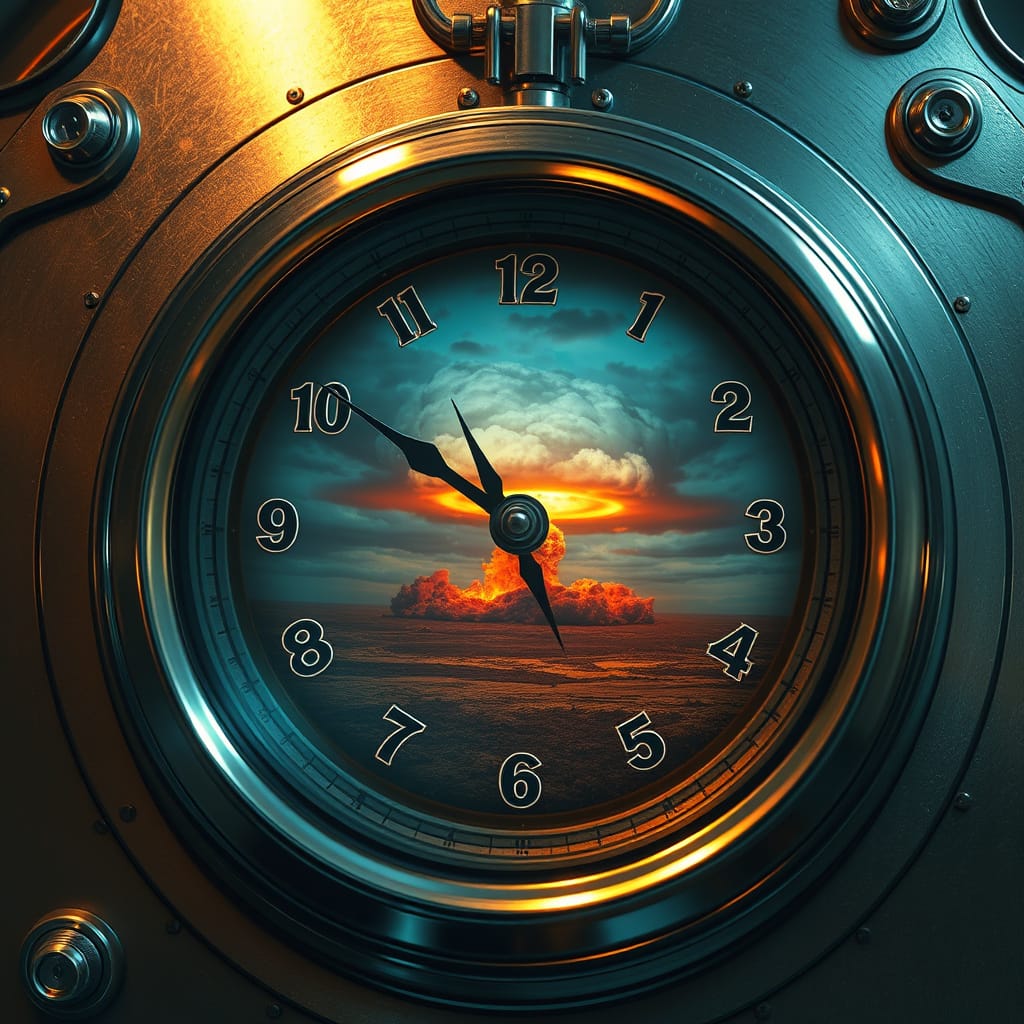
On Taking Our Eye Off the Biggest Threat to Our Existence
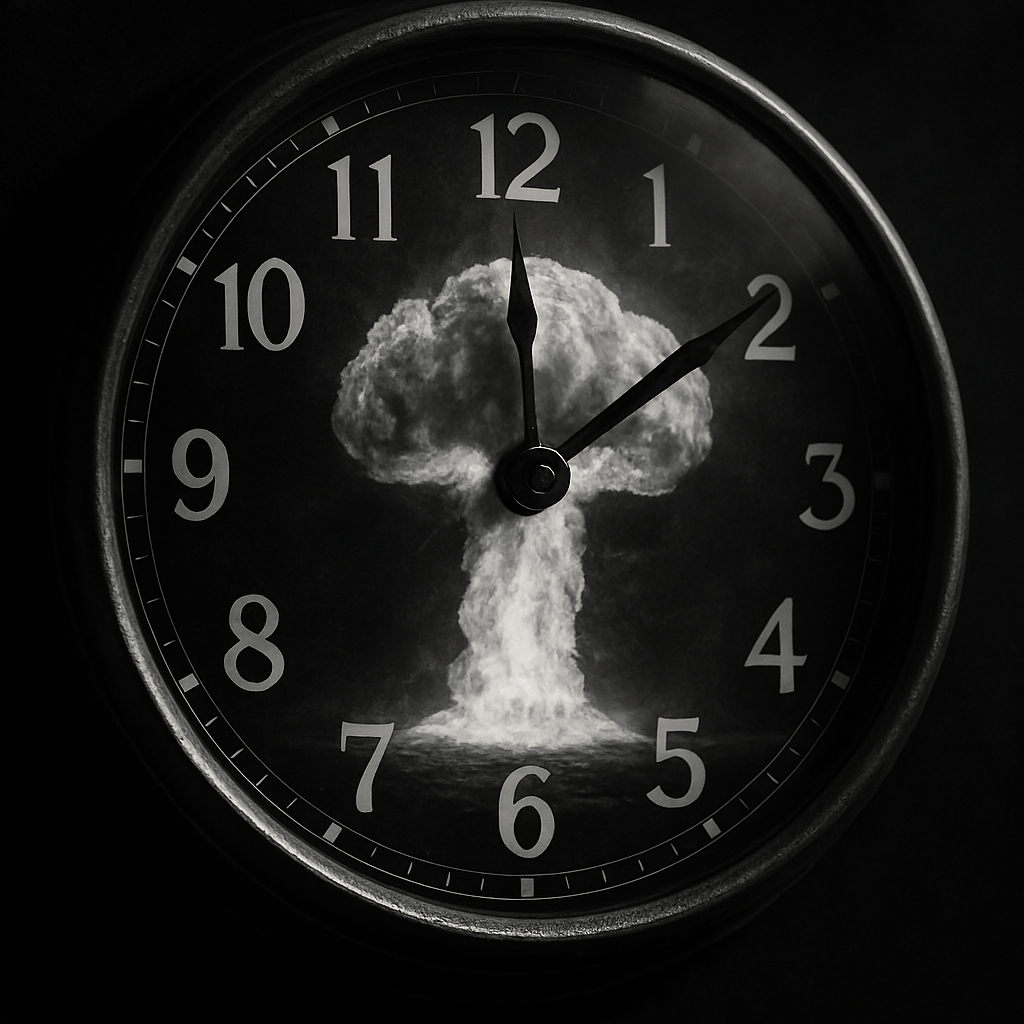
On the Eighty Year Anniversary of Hiroshima
The Most Consequential Man You Never Heard Of

In July of 1945, physicist Leo Szilard was desperately trying to change the course of history–again. Perhaps it would be more accurate to say he hoped to correct the dangerous turn in history that he was instrumental in steering just six short years earlier.
Indeed, it’s hard to find another historical figure as influential as Leo Szilard who is at the same time largely unknown to the rest of the world. Even among our most celebrated historical figures, almost none can make the claim that their impact on world history was more significant than that of Leo Szilard, not once, but twice. In July of 1945, he was hoping for a third such moment.
His first was in 1933 when he developed the theories for initiating a nuclear chain reaction, thus laying the first step in domesticating the awesome power of the atom. In 1934, he and Italian physicist Enrico Fermi patented the first working nuclear reactor. The world was unaware at the time, but it had just entered the nuclear age. Of course, this power had and continues to have great human potential. History did not have to take the road it took.
When Szilard heard that German physicists had discovered nuclear fission in 1939, he understood the dire consequences. Having escaped Nazi Germany himself, there was nothing more terrifying than the prospects that the Third Reich was on its way to becoming the first to wield a nuclear weapon. With such a doomsday device, there was no limit to the Fuhrer’s totalitarian dreams. The European Theater of World War II was still a month away. Many misdirected world leaders still believed the world could be steered away from another catastrophic global war. Germany’s imperial ambitions, however, were clear. Hitler’s acquisition of Czechoslovakia, a nation with rich uranium assets, was yet another bleak omen of things to come.
Desperate to give warning, Szilard enlisted his friend, Albert Einstein1, to help draft a letter to President Franklin D. Roosevelt.2 In the letter, Einstein warned, “In the course of the last four months it has been made probable through the work of Joliot in France as well as Fermi and Szilard in America–that it may be possible to set up a nuclear chain reaction in a large mass of uranium, by which vast amounts of power and large quantities of new radium-like elements would be generated. Now it appears almost certain that this could be achieved in the immediate future. This new phenomenon would also lead to the construction of bombs, and it is conceivable–though much less certain–that extremely powerful bombs of this type may thus be constructed.”
Roosevelt well understood the looming threat of Nazi Germany. Though it would be another year and a half before the United States joined the allies in its war against fascism, it was clear from the start that Hitler must not be the sole possessor of atomic weapons. A democratic nation must provide a check against such power. Szilard, through his connection with Albert Einstein, set in motion the most audacious scientific endeavor in the history of mankind. The Manhattan Project.3
The Doomsday Clock started ticking.
Six years later, Germany was defeated. It’s nuclear program was nothing more than a broken shell. Even at its height, however, it had never come close to cracking the code that would become the atomic bomb.4 Learning this, Szilard concluded that there was no longer a morally defensible rationale for building such a weapon. Indeed, to be the first to awaken such a monster, let alone deploy it in battle, was morally reprehensible.

Yet the Manhattan Project had born fruit. The day after the successful Trinity Test, seventy scientists signed their name to Szilard’s petition intended to stop the course they had been running for the entirety of the war. Szilard wrote, “…a nation which sets the precedent of using these newly liberated forces of nature for purposes of destruction may have to bear the responsibility of opening the door to an era of devastation on an unimaginable scale.”
Surely, the newly sworn President Truman would read a petition from one of his chief physicists on his most critical military project.
Truman never saw the petition. It was “diverted” by General Leslie Groves, the military commander of the Manhattan Project. The military had a superweapon. They were not likely to give it up. The first tick of the Doomsday Clock was this act of deception.
My God, what have we done?
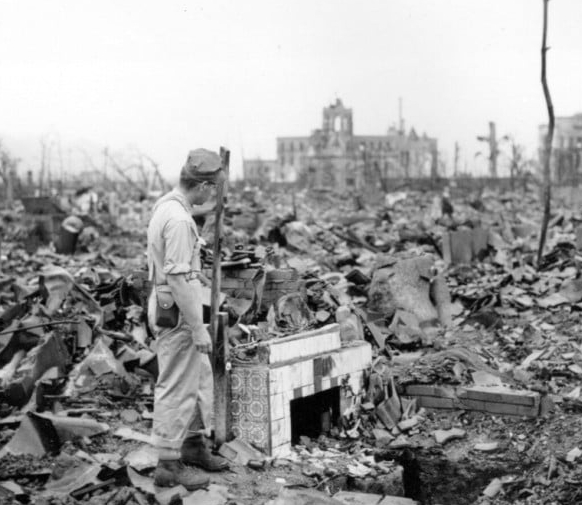
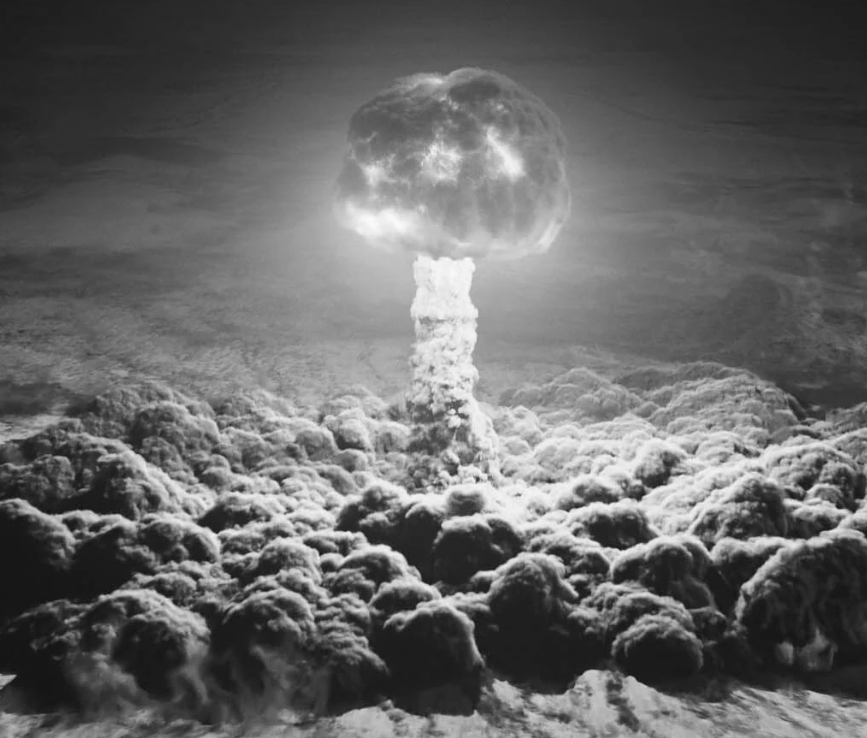
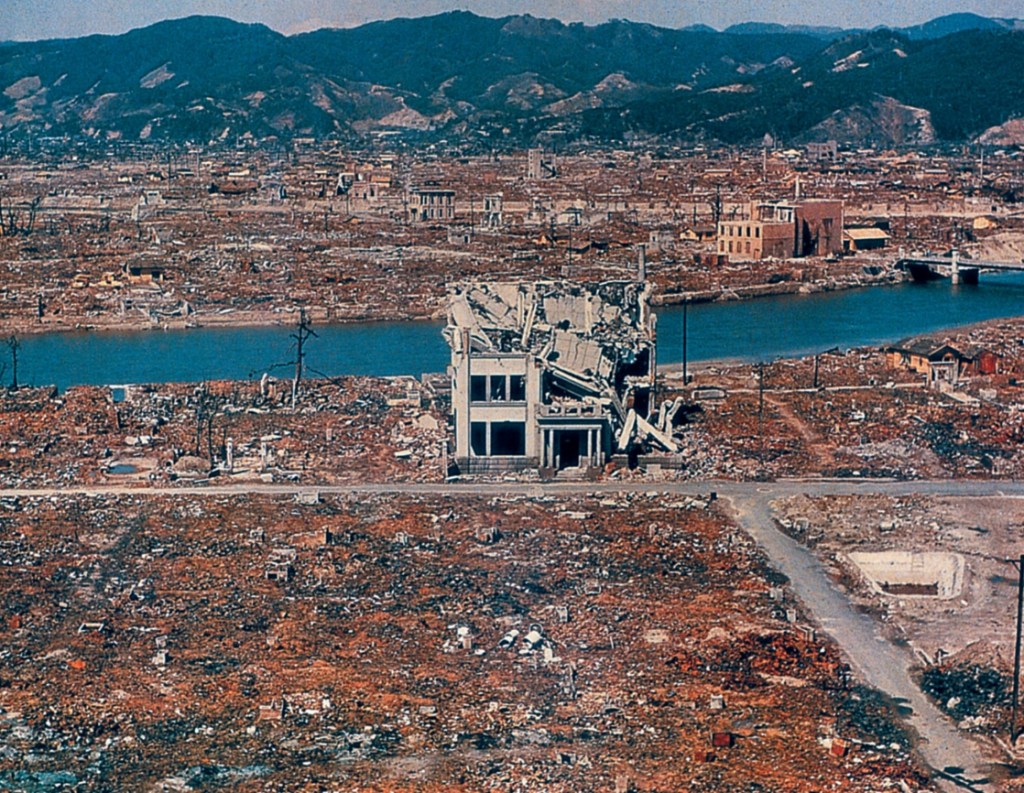
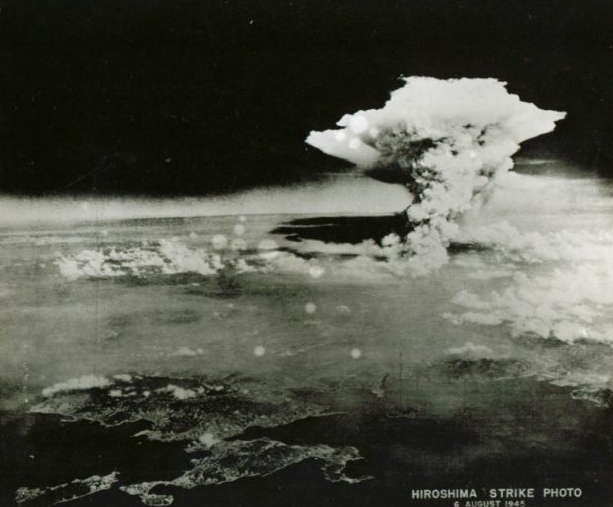
On this date, eighty years ago, the United States became the first, and thus far only, nation in history to use an atomic weapon on a targeted population. Colonel Paul Tibbets piloted his B-29, the Enola Gay, named after his mother, to Hiroshima. After his payload, a bomb named “Little Boy” was released, Tibbets took evasive action to avoid the coming explosion.
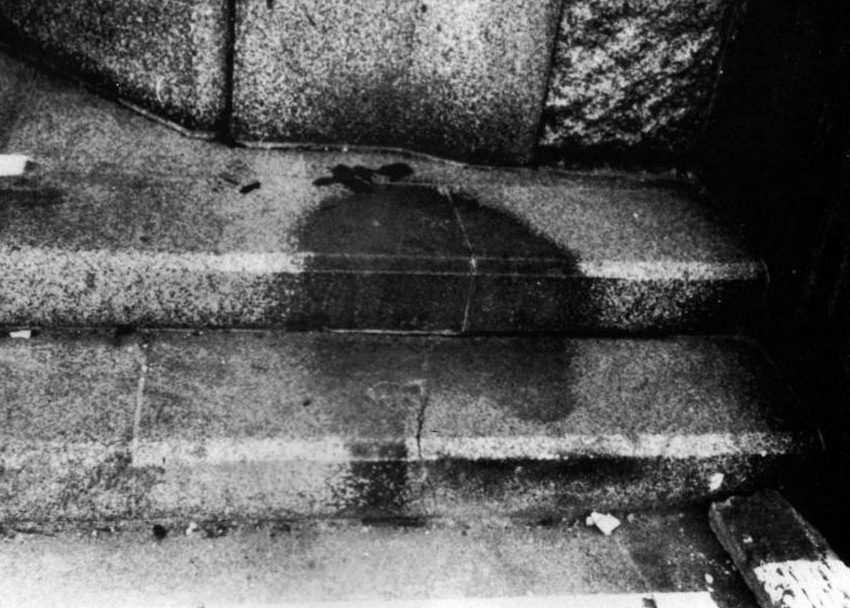
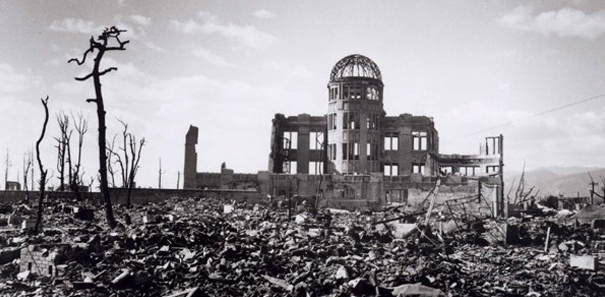
At 8:15 am, Little Boy detonated at just under six hundred meters above the city center. The resulting explosion released the equivalent of 15,000 tons of TNT (15 Kilotons). The epicenter of the city was incinerated, having become hotter than the surface of the sun.
Captain Robert A. Lewis, aboard the Enola Gay, wrote into the log, “Just how many did we kill? My God, what have we done?”
The answer to his question is hard to quantify. Official estimates put the immediate death toll at around seventy-thousand people–mostly civilians. But here’s the thing about atomic and nuclear weapons…they just keep killing. Another seventy thousand died by the end of 1945. Radioactive fallout continued to kill Hiroshima residents for decades. When one factors in the increased rates of cancer and birth defects and other assaults on human health resulting from continuous exposure to radiation, it is almost impossible to get an accurate count. One thing is clear. Little Boy killed people who were not yet even born during the war with Japan.

All of that bloodshed and suffering.
And it was all unnecessary.
A recitation of the argument that dropping an atomic bomb on Hiroshima, and then Nagasaki was unnecessary and may have even constituted a war crime goes beyond my goals for this essay.5 This thesis rests on three facts that even those who oppose this position concede.
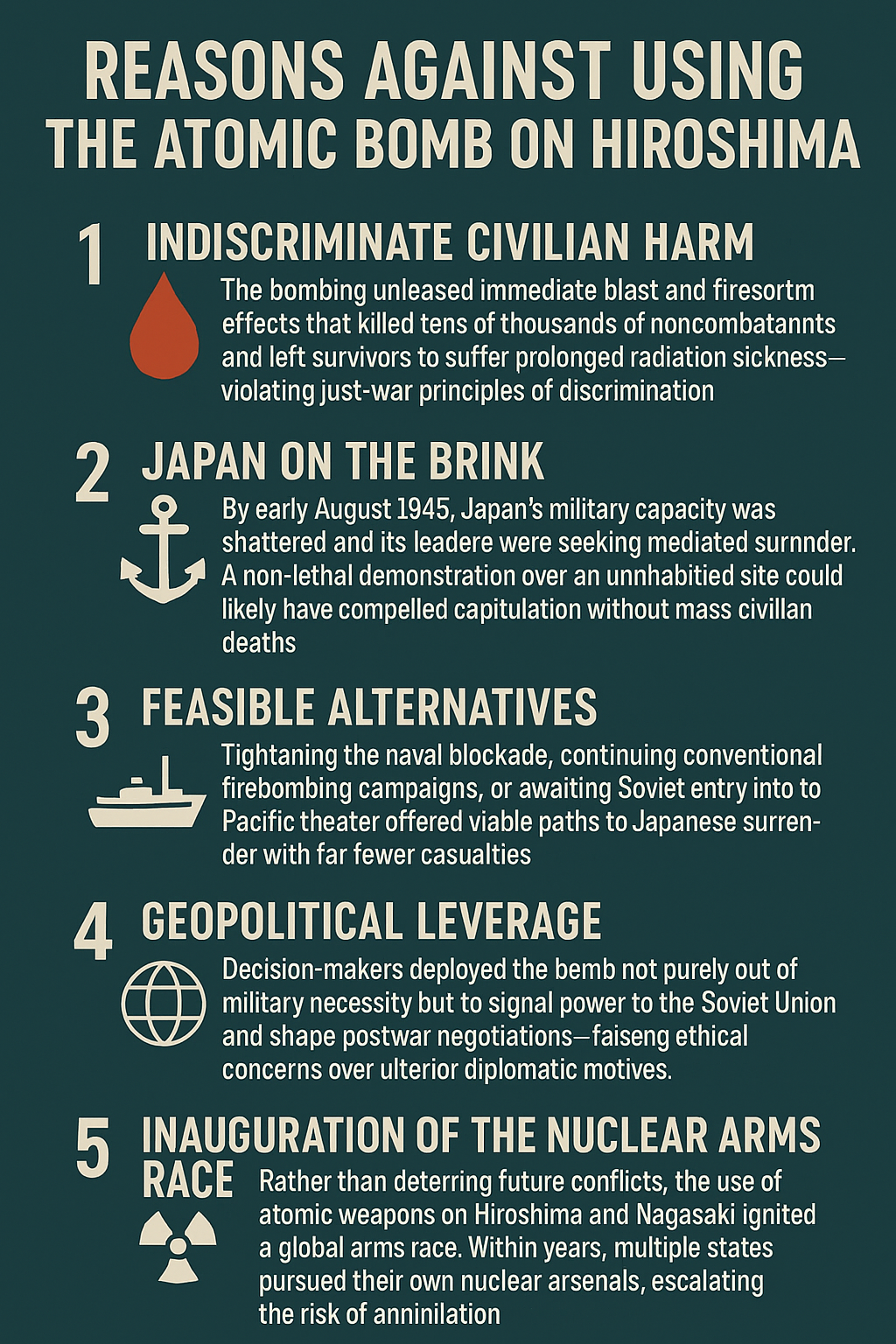
First, Japan was already destroyed. Indeed, one of the reasons for selecting Hiroshima rather than a more militarily significant target was that there were no more militarily significant targets. They were all destroyed. Hiroshima and Nagasaki were among the few cities remaining undamaged by the relentless American bombing campaign over Japan.6 By the summer of 1945 American aircraft were flying almost unopposed over the nation, bombing at will.7 Japan’s military was destroyed. She had no defenses. According to Army Air Force General “Hap” Arnold, “the Japanese position was hopeless even before the first atomic bomb fell, because the Japanese had lost control of their own air.”
Secondly, Japan had already been making overtures for surrender. These are often downplayed as “feelers” among critics, and there is some debate as to the legitimate nature of these efforts. Regardless, Chicago Tribune journalist Walter Trohan reported on August 19, 1945 that, “Two days before the late President Roosevelt left the last week in January for the Yalta conference with Prime Minister Churchill and Marshal Stalin he received a Japanese offer identical with the terms subsequently concluded by his successor, Harry S. Truman.” Further overtures by Japan asking Moscow to help negotiate the terms of surrender were intercepted by code breakers and were well known to American command.
Finally, the only obstacle to a negotiated peace with Japan was their insistence on retaining Emperor Hirohito as a figurehead. The United States, on the other hand, insisted on “unconditional surrender.” Japan offered to surrender, under this one condition months before the atomic bombings. Upon Japan’s formal surrender on September 4th, this one condition, retention of the Emperor, was granted. Hundreds of thousands of lives would have been saved had the United States agreed to this very concession from the beginning. According to historian John J. McLaughlin, “in addition to the needless loss of life of innocent civilians on the Japanese homeland, two of the most vicious and costly battles of the Pacific, Iwo Jima and Okinawa, could have been avoided.”
Taking Our Eyes Off the Nuclear Monster
Unfortunately, Hiroshima was just a drop in the bucket. Right from the beginning the twisted, or what Enrico Fermi referred to as “superb,” physics initiated with the Manhattan Project immediately conceived an even worse nightmare scenario. If controlled explosives can cause nuclear fission. Then, Fermi and physicist Edward Teller hypothesized, controlled fission could catalyze nuclear fusion, a much more destructive process. They immediately set their sights on creating Thermonuclear weapons. In 1952, they hit pay dirt when they vaporized Elugelab Island in the Enewetak Atoll. “Ivy Mike,” the first thermonuclear weapon measured in at 10.4 megatons, almost 700 times more powerful than the 15 kiloton “Little Boy.” Two years later, “Castle Bravo” unleashed 15 megatons on Bikini Atoll, a thousand times more powerful than the bomb dropped on Hiroshima.
Putting this in perspective, a Little Boy sized atomic bomb, dropped on modern day Miami, destroys all of down-town, with severe blast damage reaching Little Havana and Wynwood. Coral Gables will experience thermal radiation and significant impacts. An Ivy Mike thermonuclear device evaporates central Miami and destroys Coral Gables, Hialeah and Miami Beach. People as far away as Doral, Miami Springs, and Westchester can expect third degree burns. Castle Bravo destroys Westchester and severely burns Hollywood.
These are conventional thermonuclear weapons. The largest of these weapons, the Russian Tsar Bomba, coming in at fifty megatons, destroys Miami-Dade County and takes much of Broward County, including Fort Lauderdale with it. The blast zone reaches from Homestead to Hollywood.

Using the Castle Bravo detonation as a baseline, a nuclear explosion raising temperatures at ground zero to literally millions of degrees will destroy everything within a radius of 2.9 km (just over 1.8 miles). This is a 100% fatality rate. People in that zone will never know what hit them. Most buildings will be destroyed up to about 7 km with widespread damage spreading as much as 20 km. Thermal radiation will vaporize ground zero but will also spread deadly gamma and neutron radiation. People up to 31 km will suffer third degree burns, the survivors experiencing permanent disfigurement. The fireball will inflame deadly firestorms that will perpetuate after igniting gas lines, and other inflammable materials throughout the surrounding area. People over forty kilometers away from ground zero will be injured. Within six miles of ground zero, those who survive the initial blast will likely die of radiation poisoning within two weeks. People as much as five-hundred kilometers away will experience debilitating radiation sickness.
That’s just the initial blast.
The resulting Electromagnetic Pulse will destroy or disrupt all electronics and shut down telecommunications throughout South Florida. Radioactive fallout will spread throughout much of South Florida. Worse, the radioactive plume will be picked up by the Gulf Stream and pulled north to the Carolinas. The impacts will be felt, at least in minimal ways all over the world.
What I describe above is a catastrophe beyond comprehension. As many as two million people will die within hours of the initial blast, with countless millions more dying within weeks and even millions more permanently injured, maimed and disfigured. Much of South Florida will become a restricted, contaminated zone, ecologically, economically, and socially. Agriculture, horticulture, and fishing will be disrupted throughout the Southeast for years.
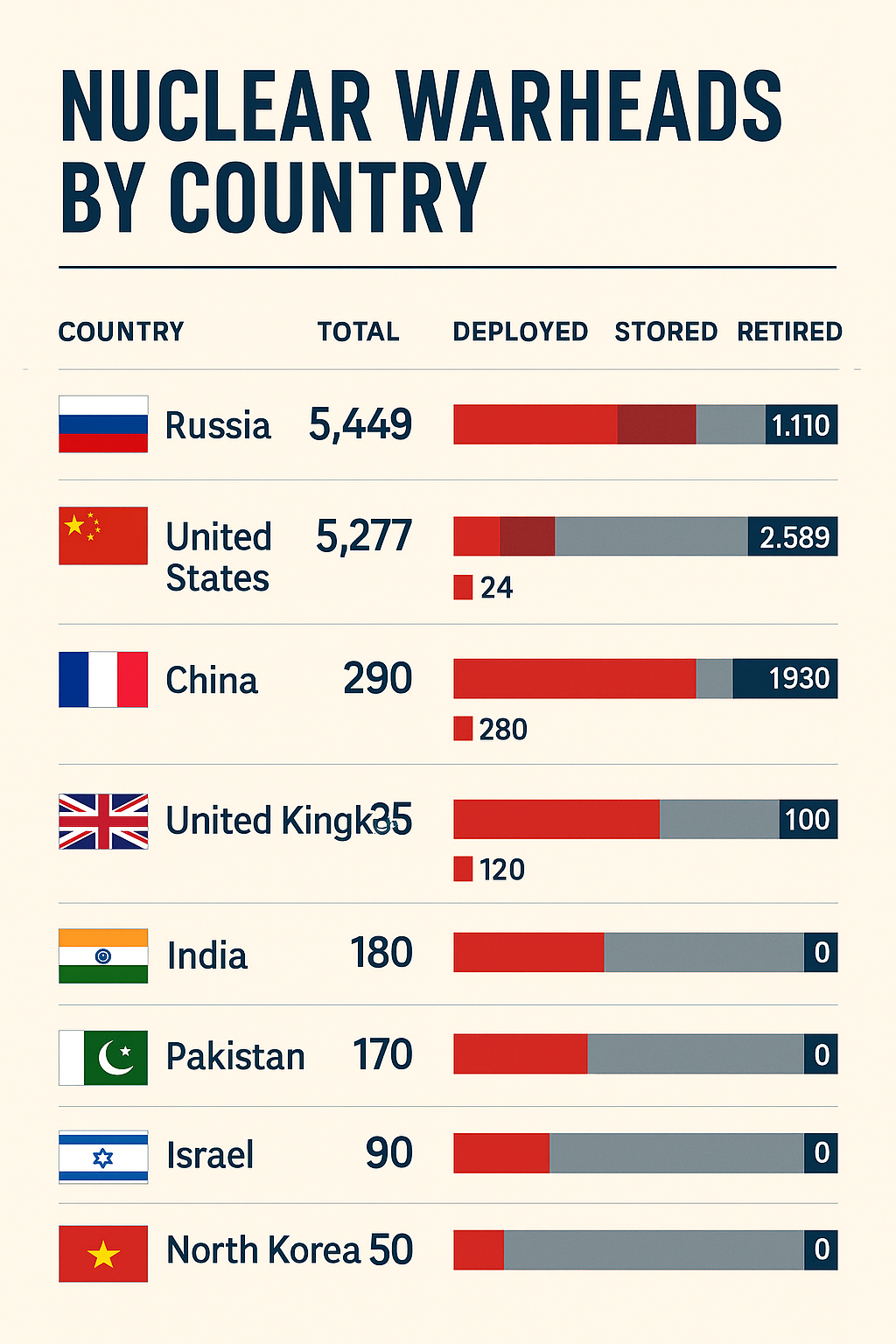
And that’s just a single bomb.
Current estimates put the combined global nuclear stockpile at over twelve thousand warheads with over two-thousand launch ready and on alert between the United States and Russia alone. That’s enough to end the game, folks. In fact, that’s enough to end many games. Existential terminus.
And yet, we have taken our eyes off of this potential threat to the point where two generations have grown up woefully ignorant of the fiery potential hanging over them like a Sword of Damocles.

When I was growing up, the threat of Nuclear Holocaust loomed over my generation. We weren’t the kids huddled under our desks doing bomb drills. Such a ritual was at least a practice of hope. We were the kids who knew that should the order be given, there was no place to hide. A full-on nuclear attack will be met with a comprehensive retaliation. All major cities will be vaporized. The surrounding countryside will be on fire. The entire planet will not only be contaminated with radiation but will be blanketed in a layer of radioactive dust, consigning humanity to the slow death of a nuclear winter.
The term we used for this eventuality was Nuclear Holocaust. A great article by Tom Nichols in The Atlantic, elaborated the reflexive cultural influence of this awareness. “During the Cold War, popular culture provided Americans with images of (and a vocabulary for) nuclear war. Mushroom clouds, DEFCON alerts, exploding buildings, fallout-shelter signs—these visuals popped up in even the frothiest forms of entertainment, including comic books, James Bond movies, and music videos. The possibility of a nuclear holocaust was always lurking in the background, like the figure of Death hiding among revelers in a Bosch triptych, and we could imagine it because it had been shown to us many times on screens big and small.”
I was thirteen years old when I was one of a hundred million viewers who watched The Day After. This made for TV movie advertised itself as a realistic depiction of the consequences of a nuclear war. Its hope was that it would inspire our world leaders to do something about the suicidal course they seemed intent on pursuing. The movie ended, fading into black as the camera pulled up and away from Jason Robards, decrepit and dying from radiation poisoning, crying in the embrace of a nuclear refugee who had taken shelter in Robards’ destroyed home. I assured my parents that I was fine. I went to bed like an adult, my eyes straight and focused, my head up. I didn’t sleep for days after that film. ‘
Fast forward just twenty-years later and I remember being bowled over by my students saying, “we should just nuke them all,” in reference to any of our wars in the Middle East. Even college students! Such uninformed statements took my breath away. “Do you really understand what you’re saying. A nuclear fireball is not just a big explosion.” I often found myself flabbergasted as I tried to adequately describe the holocaust that they were advocating. I was rarely ever able to get through…at least not to the extent I thought necessary to the discussion. How did we allow young people to grow up thinking nuclear weapons were just another big bomb? Why did we stop paying attention to this threat to our very existence?
Is Our Dystopian Filter Full?
I often wonder if there is a psychological limit to a human being’s ability to process existential threats. In the 50s and 60s, my parents watched movies about being invaded by a more powerful enemy, usually in the form of aliens with superior technology. I grew with the visions of a post nuclear dystopia, mankind blasting itself back to medievalism and tribes killing for resources.
Today’s dystopias include being suppressed by an authoritarian regime, a la The Handmaid’s Tale, or by artificial intelligence. The younger generations spend time with Zombies and the Walking Dead as an analogue to losing one’s humanity and identity, mindlessly slogging through life consuming. Then there’s the nightmare of nature reclaiming through environmental collapse or a giant piece of space rock smashing the Earth. These are all legitimate concerns.
Perhaps it’s unfair to pile on one more nightmare scenario.
However, we are often reminded that life is not fair. These reminders are offered for much lesser things.

In 1983, Lieutenant Colonel Stanslav Petrov of the Soviet Air Defense Forces was on duty in his secret bunker, charged with monitoring the nation’s early warning system for a nuclear attack. It’s a good thing he was on duty, because his system alerted him that the United States had launched five nuclear missiles toward the Soviet Union.
Under such circumstances, Petrov’s orders were clear. He was to effectuate the launch of a decisive counterstrike. However, something wasn’t sitting well with Petrov. According to an article in the Atlantic, “Had the U.S. actually been launching a nuclear attack…Petrov figured, it would be extensive—much more, certainly, than five.” Petrov held off on launching a counterattack–and thus goes down in history as yet another globally important guy whom you’ve never heard of. The five missiles turned out to be a false alarm caused by the satellite’s misread of reflections from cloud cover.
A big reason why Petrov’s “gut” was giving him a bad signal was in the irrationality of the attack. The United States may have been the enemy, with all of the stereotypes consistent with that assumption, but certainly they were rational. Even if they were going to attack, they would do so in a way that made sense. They wouldn’t risk their country being destroyed to launch five missiles.
Right?
I remember, even as a teenager, thinking the only distance between today, and the “Day After” is the wisdom and reason of our leadership. I thought then that that was a pretty leaky vessel to put much hope in. I didn’t know how good we had it.
Most of the leaders of my lifetime were at least in part dedicated to reducing the threat of nuclear proliferation. They signed treaties and entered into international agreements. An underlying theme in the global order was in guaranteeing world-wide stability to avoid what could become humanity’s last war. Nuclear powers, like the United States, convinced emerging powers to exchange their nuclear ambitions for security assurances. The last success toward that end was President Obama’s agreement with Iran, the Joint Comprehensive Plan of Action. By all observations, it was working.
Regardless, the conservative movement hated the deal and sought to undermine it from the beginning. Our current president trashed the deal the first chance he got. The Orange Don also pulled out of Ronald Reagan’s Intermediate-Range Nuclear Forces (INF) Treaty, and the Open Sky’s Treaty. In doing so, he communicated some clear truths.
First, there was no sense in reaching a deal with the United States, because its leadership was not reliable.
Secondly, if you don’t want to be vulnerable…you better get a nuke. Iraq was destroyed. Afghanistan destroyed. Iran hit by the largest non-nuclear bomb ever made.
But North Korea gets love letters.
Finally, the United States leadership is not rational nor informed.
This latter truth is the one that most terrifies me, all things being equal. I could do a separate post on all the times the world was almost destroyed but for the sensibilities of the people in decision making positions. The 1962 Cuban Missile Crisis is only the most well-known and dramatic. Unpredictable mistakes, like a satellite being confused by cloud reflections8 are much more numerous than anyone should be comfortable with. This is one of those areas where one mistake is too many. Nothing less than a perfect record will do.
Leaders on both sides understood that their adversaries were sensible, and their decisions would have some kind of rational basis. With this in mind, decision makers could respond based on that underlying assumption. They were able to put their fears aside and themselves make rational decisions that meant the difference between a continuation of history and nuclear holocaust.
Can we say the same today? How will such people respond should another confused sensor suggest an apocalyptic response? Can those overseeing our nuclear systems be sure that our leadership is sensible, rational, or at the very least “not crazy?”
As it stands, that Nuclear Sword of Damocles hanging over us is doing so on a thread frayed from a generation of stupid leadership. It is currently being tugged by an Orange Man Baby who has no idea what he’s doing but is addicted to looking like the tough guy. Nations are ramping up their payloads, or updating their systems for greater, deadlier efficiency. Iran will restart its program, and other countries are encouraged to do the same. Each additional nuclear system is an added weight on that sword. Each new nuclear power has the potential for countless faulty computer sensors connected to hair triggers.
Eighty years ago, the nuclear monster was born. The countdown to the apocalypse that is this monster’s due started ticking. There were times when the hands sped up, times when our leaders had enough resolve to slow the clock down. But it has never stopped ticking. That ticking, however, has been relegated to background noise. The threats that we close our eyes to are the most dangerous.
Notes and Sources
- Szilard and Einstein had collaborated on the design of a home refrigerator based on the Einstein-Szilard Pump. ↩︎
- After all, it was unlikely the President of the United States would actually read a letter from some guy named Leo…but a letter from Einstein would be read. ↩︎
- The Manhattan Project was a collaboration between the United States, Canada, and the United Kingdom ↩︎
- There are many reasons for this. Germany was under constant bombardment for years, making it hard to build the necessary infrastructure. Hitler was notoriously unforgiving when it came to failure. Consequently, his scientists rarely had the courage to engage in experiments that might fail. Consequently, they learned little. Also, most of the top atomic scientists in Germany were Jewish, and had little incentive to help Hitler develop a super-weapon. ↩︎
- A good source for this argument is: Takaki, Ronald T. 1995. Hiroshima: Why America Dropped the Atomic Bomb. Boston: Little, Brown and Co. A more recent treatment on this can be found in: Pyle, Kenneth B. 2024. Hiroshima and the Historians: Debating America’s Most Controversial Decision. Cambridge: Cambridge University Press. ↩︎
- This made them ideal for testing the destructive potential of atomic bombs. Indeed, in 1946, Admiral “Bull” Halsey observed, “the first atomic bomb was an unnecessary experiment…. It was a mistake to ever drop it…. [The scientists] had this toy, and they wanted to try it out, so they dropped it…” ↩︎
- The firebombing of Tokyo, in fact, had destroyed more of the city and killed more people than Hiroshima. ↩︎
- Another noted example of a most important person in history whom you’ve never heard of was Commander Vasili Arkhipov. At the height of the Cuban Missile Crisis a captain of a Soviet B-59 nuclear submarine decided that they were under attack. After his vessel came under relentless depth charge attack, he made the call to launch the nuclear payload. Arkhipov intervened and convinced the captain to wait for word from the Kremlin. ↩︎




 The Mad Sociologist Blog
Leave a comment