

PRISONS IN DEMOCRATIC, LIBERAL, AND AUTHORITARIAN DISCOURSE
The Prison in the American Republic
In 1831, Alexis de Tocqueville and Gustave de Beaumont came to the fledgling United States ostensibly to study one of nation’s most intriguing innovations in republican technologies. It was not the Cotton Gin. It was not some legal philosophy, separation of powers, or some method for guaranteeing devotion to the rights of man.
No. They came to study American prisons. Specifically, a new innovation–solitary confinement.1
At the time, these “complete and austere institutions”2 were a relatively new innovation at that scale. At the time, they seemed a uniquely enlightened and republican approach to law enforcement. This was opposed to the brutal, two-tier system prevailing in Europe before the advent of the prison. The latter was a system in which common people were subject to vicious public assaults against their bodies, from mutilations, whippings, up to and including immolation and drawing and quartering, even being left to starve to death publicly in suspended cages.
Meanwhile, the nobility suffered much less indignity. They were imprisoned, but even their cells were often better furnished than most people’s homes. Even when executed, their debt was paid with a swift slough of their heads as opposed to the long, gruesome torture experienced by commoners.
We may look back at such forms of punishment as barbaric. In many ways, they were. They were public, ritualistic demonstrations of the unlimited power of the sovereign. As social theorist Michel Foucault pointed out in his pivotal study, Discipline and Punish, “if severe penalties are required, it is because their example must be deeply inscribed in the hearts of men.” Public mutilation was not intended as mere punishment, but as a lesson to all of what the sovereign could do should you step out of line.
And yet, the bloody nature of such spectacles created inherent limitations. A sovereign prince who was too eager with such violent displays was likely to be condemned by his subjects. Those condemned, tortured, and mutilated, could very easily become martyrs, elevating the very causes a king wished to squelch. Public brutality in the name of the sovereign was a tactic best used sparingly and strategically. In reality, a competent king’s subjects were often quite free to go about their business without fear.
Prisons, at least prisons in republics were in theory, egalitarian. Those who broke the law went to prison. That was the theory. The reality was, and remains, much less equitable. As Foucault pointed out, “A justice that is supposed to be ‘equal’, a legal machinery that is supposed to be ‘autonomous’, but which contains all the asymmetries of disciplinary subjection, this conjunction marked the birth of the prison…”3
On the other hand, power exercised within prisons took place away from the public eye. The inner workings of the prison were a dark mystery to the population as a whole. Citizens subject to imprisonment were simply taken away, not seen again until the state vouched a return to freedom. In a world in which a sovereign king imposes penalties on obedient subjects, public torture rituals offered a sound demonstration of his royal power. In a republic, in which the citizens were sovereign, the quiet secrecy of the prison became a ubiquitous emblem of state power.
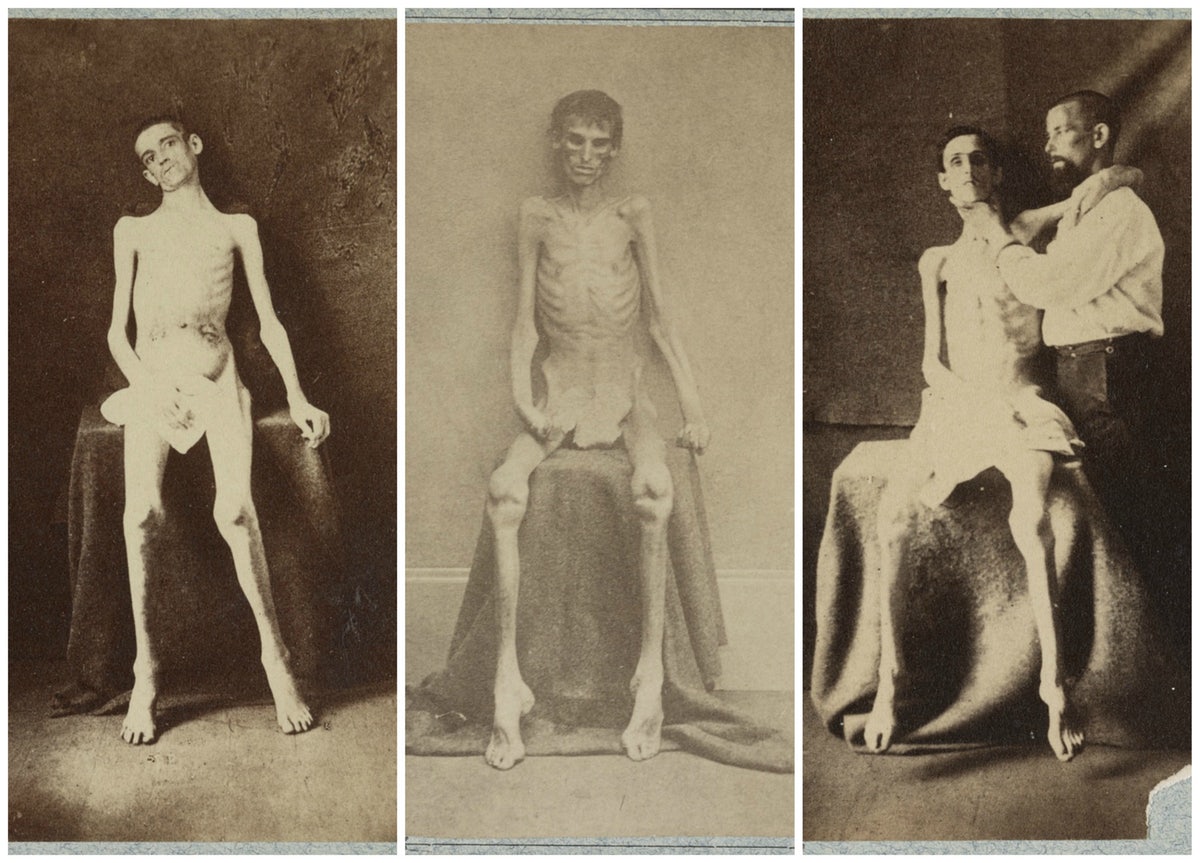
Despite some early admiration, American innovations in imprisonment often constituted a dark stain on its history. During the Civil War, the squalid conditions in the Elmira prisoner of war camp, also called “Hellmira”, were only outdone by the inhuman hellscape of Andersonville. Their legacies left deep, gaping wounds in the national fabric as the U.S. tried to restore itself during Reconstruction.4
U.S. torture camps were notorious during the Philippines War. Waterboarding, known as the “water cure”, was so prevalent in these “concentration zones” that their use by the United States was offered by the dictator Rodrigo Duterte as justification for his own barbaric policies.5 Then, of course, there was the shameful internment of Japanese citizens and immigrants during World War II under Franklin Roosevelt’s infamous Executive Order 9066.6
The shadow of the prison casts a dark pall on American society as well. As it stands, the United States has the highest population of incarcerated people in the world, with almost 2 million people occupying our local jails, or state and federal prisons. With a population greater than that of West Virginia, if incarcerated Americans were their own state, they would have three representatives in the U.S. House, and five Electoral College votes. The U.S. War on Drugs, and War on Crime, in terms of scale if not brutality, constitutes one of the greatest violations against human rights in history.
Prisons as a Technology of Social Control
Prisons are a technology of social control. From de Tocqueville’s time to now, the prison has become a pillar of modern corrections. As Foucault notes in his influential social history, Discipline and Punish: The Birth of the Prison, “It [the prison] seemed to have no alternative, as if carried along by the very movement of history.” Foucault referred to the prison as “…the detestable solution, which one seems unable to do without.”
Prisons are not just social technologies, “correctional” institutions. They are an integral part of the republican (small “r”) mindset. The role of the prison in a free society is up for debate, with the more democratic elements of the republic arguing that there should be no role. In the democratic mind, the prison in intrinsically anti-democratic. On the other end of the spectrum, however, the reactionary or authoritarian views the prison as the essential means of securing stability in a world on the brink of chaos.
At first look, the prison as a technology of social control seems reasonable. The first and most obvious function of the prison is the removal of the dangerous from the body of potential victims. The overarching idea is that there are people within the social body who constitute a danger for the rest of us. They are murderers, rapists…they are not the best people. Such people need to be rooted out and sequestered from the rest of the population at least until they no longer constitute a threat. For some, this means they will remain in prison for the rest of their lives, as they will always constitute a threat. In extreme cases, they such dangers must be put to death.
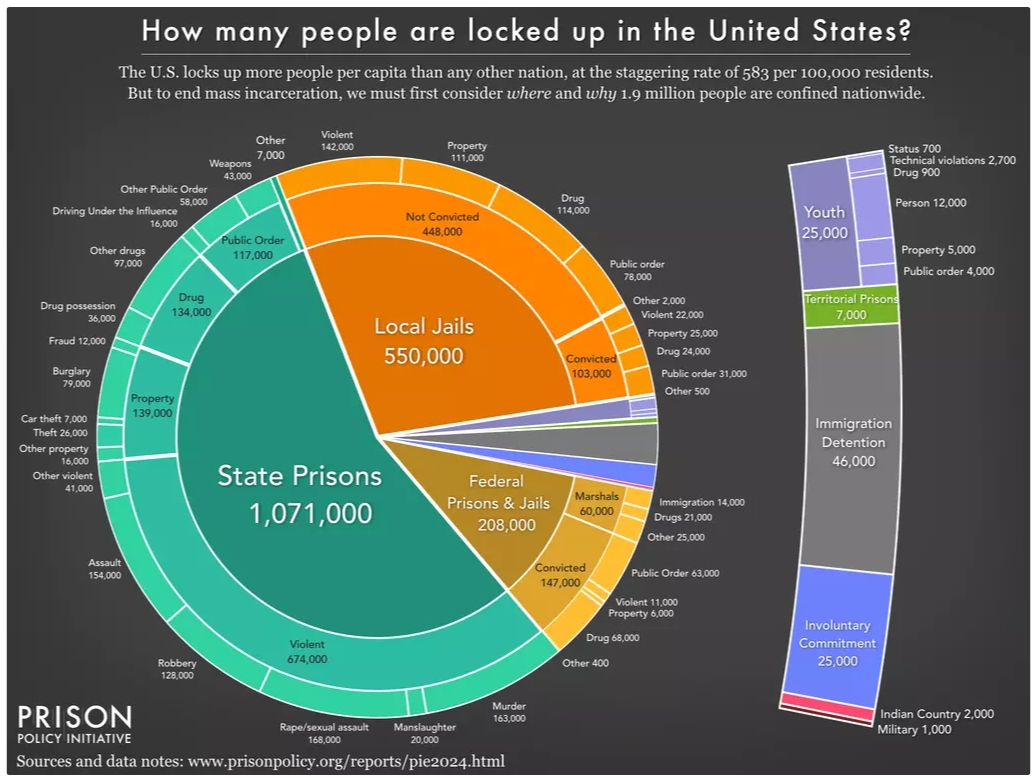
Even a surface analysis of this theme indicates that separating the wolves from the sheep is not the only, or even the major function American prisons. The majority of inmates in our prisons are not violent criminals. According to the Prison Policy Initiative, “In reality, state and federal laws apply the term “violent” to a surprisingly wide range of criminal acts — including many that don’t involve any physical harm.”7
Yet the discourse of violence pervades the social justification of prisons. Any attempt at prison or criminal justice reform is derided by authoritarians and centrists alike as akin to allowing murderers to roam free. Again, according to the Prison Policy Initiative, “The common misunderstanding of what ‘violent crime’ really refers to — a legal distinction that often has little to do with actual or intended harm — is one of the main barriers to meaningful criminal legal system reform.”
The second function is the most “liberal” as well as the least defensible in light of the facts. Prisons are prescribed as a means of reforming the criminally deviant. In Foucauldian terms, the role of the prison is to act upon the body of the deviant subject, to regiment personal discipline, and to transform the prisoner into a normal citizen. Foucault refers to this process as creating “docile bodies.”
There are two discourses on the reform approach to prison technologies. First is the more liberal approach. The deviant can be removed from society, given time to reflect on his or her misdeeds, and learn the skills necessary to conform to established norms and values. This was the approach of the Auburn System as observed by Alexis de Tocqueville, a system of imposed confinement, work, and isolation. Contemporary liberals advocate the inclusion of training and education programs as part of the prison regimen.
The lie to this liberal discourse is revealed when such “reformed” individuals return to free society. Unemployment rates for ex-convicts are over five times higher than the population as a whole.8 Landlords are uninclined to accept that a former convict has been “reformed” in any meaningful way regardless of whether or not they were able to get their High School equivalency behind bars. Consequently, former convicts are ten times more likely to experience homelessness than the population as a whole.9 If there is a reform discourse for incarcerated individuals, it’s certainly not universally accepted as a valid outcome.
On the other hand, we have the more conservative approach to personal reformation coming out of prison. The idea is that prison should be such a horrible experience that released convicts will never want to return. Again, this discourse is contraindicated by reality. Recidivism rates at the federal level range from about 40% for non-violent offenders to over 60% for violent offenders, with similar rates at the state level.10 Prisons are not a technology for reforming the deviant individual. Indeed, there is evidence that prisons are a great place for criminals to learn how to be better criminals.11
The Prison as Retribution and a “Those People” Discourse
The final discourse justifying the existence of prisons is one of retribution. Those who commit crimes deserve to be locked up in a place in which they will suffer. It has nothing to do with reforming the individual or even finding a place in which to sequester those who pose a danger. In other words, it’s not about “corrections” per se. Prisons are established for punishment. They are set aside for those who deserve to be punished for breaking the laws. For some, going to prison will be enough of an inducement to conform to social norms and expectations. For others, it will not. In the latter case, those individuals deserve to spend the rest of their lives behind bars.
On a discursive level, prison is for “those people.” “Those people” deserving of prison. The rub is in how we go about identifying “those people.” According to our manifest values, “those people” are identified through a dialectic process by which the state, the body assigned the task of identifying “those people,” must provide valid evidence to prove that a target individual is, in truth, a member of that population. In opposition, a professional representative is tasked with subjecting this evidence to scrutiny and offering counter evidence to demonstrate that the individual in question is not among “those people.” A judge and/or jury, is expected to sit as an objective observer of this antagonistic process, weigh the evidence, and make a determination as to the validity of the state’s claim.
This is a ritual called due process. As such, this ritual holds the system together by vouching legitimacy to the outcome. Embedded within the process is checks and choke points designed to make it difficult, but not impossible, for the state to impose its will on the final outcome. Rights to privacy, to personal security, are enforced, any violation of which will be held against the goals of the state. There is a right way by which to go about collecting evidence, to presenting the evidence. In the end, the target individual has recourse to contest the results, to appeal to a higher authority.
In other words, the system is designed to privilege the liberties of “us people” even at the expense of allowing one of “those people” to avoid due punishment. It’s not a perfect process by any means. First, it is a system that must contend with human cognitive biases that often predetermines who is or is not among “those people” based on in-group/out-group membership, and how such accusations validate personal worldviews. Also, many of those cognitive biases are shaped and reified by a culture imbued with racial and ethnic valuations of “the other.” These are a problem for the liberal centrist or the democrat ever carrying the burdensome goal of building a just society.
Authoritarians are not so burdened. For them, stability is primary. Those imbued with an authoritarian mindset12 see “those people” as terrifying. They are the purveyors of chaos, barbarians at the gate, always ready to rend the very fabric of civilization. Furthermore, they are easy to identify. Everyone with any sense can identify one of “those people” just by looking at them. there is nothing more important than to protect “us people” from “those people” at all costs.
In normal times, this authoritarian discourse is embedded in the due process system in practice as well as encoded in normative structures and values. When one of “those people” is subject to due process, often identifiable according external racial and/or ethnic characteristics, they enter the system carrying the burden of Social Junk or Social Dynamite.13 In other words, they are either a burden on society because they are incapable or unwilling to be productive citizens, or they are a threat, genetically predisposed to violence and crime. The consequences of this mindset speak loud in the data.
It’s a dichotomous discourse. Both democrats and authoritarians may agree that there is a “those people” that deserves to go to prison (for the more radical left, this is not a given). For the democrat, individuals are deserving based only on their actions. They do not recognize a “criminal class” or a population with an intrinsic propensity as social junk, or social dynamite. For the democrat, it is the responsibility of the state to prove that one’s individual actions merit imprisonment. Any error should be on the side of liberty. The possibility that someone who is not one of “those people” might be sent to prison is a profound injustice, not to be tolerated. It’s a violation of fundamental human rights. For the democrat, it’s better that one hundred of “those people” remain free than for one undeserving person to be sent to prison.
The authoritarian has a different mindset. Keeping “us people” safe from “those people” is paramount. “Those people” are identifiable as “the other” and cannot be trusted. That some of them might be “good people,” does not mitigate the need to subject their entire race, the entire out-group to surveillance and intrusion. That some of “us people” might get caught in the dragnet and sent to prison is an acceptable cost against the possibility that even one of “those people” is allowed to walk free.
The Evolution of the Authoritarian Discourse on Prisons
Times of uncertainty or instability, what sociologists refer to as “anomic,” are fertile ground for authoritarian discourse. Of course, a direct attack from “those people” is optimal. After 9/11, protecting “us people” from “those people” was paramount even in the face of sacrificing fundamental human rights. President Bush pressed the dialectic regularly, emphasizing one was either with “us” or with “the terrorists” or “the enemy”–“those people.” This constituted an expansion of the “those people discourse.” It wasn’t just about the terrorists. Rather, anyone who might be accused of being sympathetic to the terrorists were also categorized as “the other.”
This was a fruitful time for othering. Authoritarians in Congress passed the Patriot Act that opened Americans up to surveillance and institutionalized domestic spying. But us good, law abiding, non-terrorist Americans had nothing to fear. Only the terrorists needed to worry. In this catastrophic collapse of human rights and decency, the prison was a central theme. Suspected terrorists were rounded up and sent to Guantanamo Bay, a special, offshore prison that existed in an amorphous legal gray zone, at the same time under the auspices of the United States, but also outside of its jurisdiction.
In combat zones, suspects were rounded up and shipped to black sites like Abu Ghraib. These secret prisons were strategically located within national jurisdictions that were less enamored with the concept of human rights. Suspects arrested by American forces were shipped to these black sites through a process referred to as Extraordinary Rendition. There suspects were held without trial, without legal recourse, and subject to “enhanced interrogation,” the Administration’s euphemism for torture.
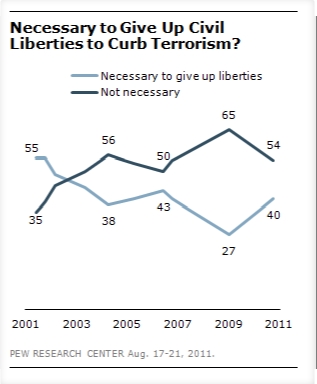
Unfortunately for authoritarian interest, fear is not self-sustaining. 9/11 turned out to be a moment suspended in time. Eventually even the horrific shock of that traumatizing Tuesday morning faded, and citizens were no longer bound by their darker tendency to seek succor in strongmen. It was not long before Americans began to prioritize their rights over security again. Many Americans were appalled by torture, and revelations about the depth of government surveillance done in their name. Barack Obama ran in 2008 on the promise of shutting down Guantanamo Bay. It was as if Americans were increasingly embarrassed by their own willingness to abandon their own rights.
This also provided a lesson for the authoritarian interests. First, using prisons outside of the reach of liberal or democratic oversight was a spectacular success. Oh, they’re expressed goals were not met. They did not make the world safer from terrorists or derive actionable intelligence for the tortured. That was never the intent. They did, effectively, create a systematic network of fear and a demonstration of the empire’s awful power. And officially, there was nothing the liberals or democrats could do about it. Even President Obama’s desire to shut down Guantanamo couldn’t be accomplished.
The only problem was that when Americans woke from their terror fugue, they were appalled over the barbarism inflicted in their name. They became activated and turned against the very strongmen they had originally embraced. Once they realized they were mostly safe, they no longer felt the need for heavy handed protection. They were no longer afraid.
Authoritarians had to find a way to make fear to be a sustaining force in American life. Only, things were going fairly well for Americans. The only thing Americans really needed to fear was their bosses, and the economic elite who could buy political influence in new and menacing ways. The wealthy were the only threat to American life or liberty. That was not the message the authoritarians wanted to send.
No. To sustain fear in the population, there must always be a “those people,”
“Those people” must be presented as a constant existential threat. At the same time, they must also be far removed from the real threats, those who use their money to drive the discourse. The specter of the terrorist always loomed in the background, but the United States has a long history of othering those people from which the authoritarian can draw.
The United States, having been established on slavery and exploitation, has incorporated a reliable population of “those people” on which to fall. These are populations, socially constructed as “races” who embody the role of the other. These are special categories of “those people” defined as inherently dangerous, inherently worthless, and therefore inherently deserving of sequestration via imprisonment. Foremost among these subcategories is the black man, defined in authoritarian discourse as both social dynamite, always on the verge of explosive destruction, and social junk, lazy scavengers living off of the benefits created by deserving “us people.”14
Whereas the black man is the icon of the “those people” through long tradition, and the black woman is his natural compliment, authoritarian discourse is generous in its willingness to other. Scapegoating immigrants has a long and storied legacy. Of course, there has never been room in the United States for the radical leftists and anarchists. Feminists. Atheists. Islamists with their Sharia Law. Each subspecies presented as the embodiment of social dynamite intent on destroying everything real Americans love and cherish, or social junk living as parasites, sucking resources from “us people,” or some combination of both.
And the only appropriate place for “those people” is prison. An individual from such othered groups recognized as inherently criminal, must also be inherently best served with prison. Due process is a useless redundancy because of course such people must be removed from the larger society.
The Prison as Ever-Present Specter
There are three discourses in the United States regarding the role of the state in connecting those people with imprisonment. Most dominant is the liberal discourse. This story suggests that nobody is inherently worthy of imprisonment. For the liberal, it is incumbent upon the state to prove that an individual, regardless of their group membership, deserves punishment and sequestration. The more enlightened corner of this philosophy will recognize that some members of society, the most marginalized, are especially burdened with the probability of imprisonment, and reforms must be made to balance the scales of justice. Authoritarians now decry this latter view as Critical Race Theory.
The authoritarian discourse emphasizes that “those people” are inherently dangerous, and therefore it is incumbent upon the state to round them up and put them in prison prophylactically. If some can prove that they do not merit such interdiction, that may suffice to preserve their liberty. Otherwise, the only appropriate place for “those people” is prison. This may not be the most common discourse, but it is currently dominant in motivating state action.
The current administration embodies this authoritarian discourse. In that, it is the next logical iteration of George W. Bush’s War on Terrorism. If being a terrorist, or with the terrorists, is sufficient for being denied due process, subject to perpetual imprisonment and even torture, then this standard can be applied to all who qualify as “those people.” Again, this designation is easiest to apply to those burdened with a long history of being othered. People of color, people from different cultures, people who look different, people who think different.
For such people in the combat zones of the War on Terror, rendition, torture, and permanent imprisonment was a persistent probability. There was no safety, no rights, no recourse. Anyone, at any time could be dragged from their homes, sent to a foreign gulag, disappeared forever. The American prison and the horrors within shaped every aspect of their lives. Those of us on the left warned then that it was only a matter of time before this process were imported.
The current administration is proving that prophesy. For immigrants, or those who look like immigrants, in the United States, CECOT is now an ever-present specter in their lives. The imprisonment of Kilmar Abrego Garcia is not a bug in this system. It’s the feature. Now everyone understands that one’s guilt or innocence, one’s membership in the “those people” group, is irrelevant. Once the state imposes its power, there is nothing you can do. The best one can do is avoid the threat of state power. Leave the country. If that is not possible, then keep your head down and your mouth shut. Do not speak against the state, like Mahmoud Khalil, Rumeysa Ozturk, or many others who are guilty of nothing but speaking against genocide–but they are “those people” and they are speaking against a genocide approved by the Administration.
The democratic discourse, by far the least voluminous of the three, points out that in a society steeped in exploitation of “those people,” the very notion of the prison is inherently authoritarian. The specter of the prison perpetuates othering discourse. In this matter, the prison is the central pivot point in a discursive cycle that identifies “those people” among the exploited, subjects them to increased probability of imprisonment, then uses the increased imprisonment of “those people” to confirm the original myth.
Under the current administration, with its prison wraith far out of reach of any democratic check, it is impossible to assume we live in a free society. The President has already stated that he hopes to start shipping the “home growns” to Bukele’s gulag. The prison is no longer a specter only for the immigrant, the terrorist, the dark skinned. It is a specter for all of us.
Michel Foucault wrote about the prison as part of a larger project. He elaborated on the prison, as well as the clinic, the school, the mental hospital, the psychiatrist’s couch not as insular entities acting upon individuals in and of themselves. Each was part of a larger system of power in modern societies by which individuals disciplined and regimented themselves according to socially constructed standards of normality. The prison, according to Foucault, is not just for prisoners. The prison is for everyone who may be inclined to entertain a deviant thought. In essence, the very existence of prisons locks us all behind the ephemeral bars of conformity.
The prison is and always has been a tool of repression. Its very existence provides a ubiquitous specter of fear. This fear may be channeled through rhetoric suggesting that only “those people” are subject to prison. This, however, is small comfort, because if “those people” can be disappeared into a foreign gulag without due process, then all it takes is someone at the state level identifying you as one of those people. All it takes is a simple expansion of the othering criterion. Nobody is safe from the prison.
Notes and Sources
- Beaumont, Gustave de, and Alexis de Tocqueville. 1833. On the Penitentiary System in the United States and Its Applications in France. Philadelphia: Carey, Lea & Blanchard. ↩︎
- Foucault, Michel. 1977. Discipline and Punish: The Birth of the Prison. 2nd Vintage Books ed. New York: Vintage Books. ↩︎
- See Footnote 2. ↩︎
- Prisons of the Civil War: An Enduring Controversy – Warfare History Network ↩︎
- The Ugly Origins of America’s Involvement in the Philippines – JSTOR Daily ↩︎
- Executive Order 9066: Resulting in Japanese-American Incarceration (1942) | National Archives ↩︎
- Mass Incarceration: The Whole Pie 2024 | Prison Policy Initiative ↩︎
- Out of Prison & Out of Work | Prison Policy Initiative ↩︎
- A Guide To Finding Housing After Incarceration | Prison Legal News ↩︎
- A Guide To Finding Housing After Incarceration | Prison Legal News ↩︎
- When Crime Pays: Prison Can Teach Some To Be Better Criminals | Utah Public Radio ↩︎
- Drawing from: Adorno, Theodor W., Else Frenkel-Brunswik, Daniel Levinson, and Nevitt Sanford. 1950. The Authoritarian Personality. New York: Harper & Brothers. ↩︎
- Spitzer, Steven. 1975. “Toward a Marxian Theory of Deviance.” Social Problems 22(5):638–651. Toward a Marxian Theory of Deviance* | Social Problems | Oxford Academic ↩︎
- Hochschild, Arlie Russell. 2016. Strangers in Their Own Land: Anger and Mourning on the American Right. New York: The New Press. ↩︎



 The Mad Sociologist Blog
Leave a reply to The Aesthetics of Cruelty – The Mad Sociologist Blog Cancel reply