


On the Fall of the Democratic Party
1988 was the first Presidential election in which I could vote. It was a pretty disappointing experience having to choose between Vice President George H. W. Bush and Massachusetts Governor Michael Dukakis (I voted for Dukakis).
For a while, there, I was pretty excited about what was going on in the primaries. For a moment in time there was a chance that my first vote could be of historic importance because Rev. Jesse Jackson had enough momentum to really be the Democratic nominee. He won Michigan. He outlasted party stalwarts like Al Gore, Joe Biden, and Dick Gephardt. In the end, he came in second. He was the first black man to offer a meaningful primary challenge for a major party’s presidential nomination.
I didn’t realize at the time just how meaningful his presidential run was. Yes, his run was a symbolic victory for the civil rights movement. Most political experts agree that there would be no Barack Obama if not for Jesse Jackson. Arguably, there would have been no Jesse Jackson without Shirley Chisholm, so…
His campaign, however, was more than just a civil rights moment. It was democratic a turning point. The Reagan Era brought about the end of the New Deal Coalition. The fall and retirement of Speaker Tip O’Neill marked the final sentence of the New Deal Story. At that point the Democratic Party was in disarray, having been leveled by the Reagan Revolution.
The Southern conservative caucus was dissolving,1 stepping into the open embrace of the GOP. The Democratic Party needed a new direction. It was at a crossroads. On the right was the growing Democratic Leadership Council, or the so-called “New Democrats.” They embodied the “move to the right” strategy that has become the standard mantra whenever Democrats lose…and since the 80’s, Democrats lose a lot. In essence, the New Democrat was a pro-corporate, free marketer who liked Medicare and Social Security. Maybe they were willing to protect a woman’s right to choose.
In other words, they were Republican Lite.
On the left, was Jesse Jackson and his Rainbow Coalition. His vision was that of a multicultural, cross-class movement for social and economic justice. He campaigned on investing in jobs, education, and communities, especially poor communities. He would pay for this by cutting the monstrous defense budget and raising top marginal tax rates to 38%.
Sound familiar?
It was Jesse Jackson who set the stage for Bernie Sanders, AOC’s “squad,” and the Progressive Caucus.
Instead, the Democratic Party went for Dukakis and staid pro-corporate centrism. It then turned to Bill Clinton as its DLC standard bearer. Instead of a Rainbow Coalition, we got the “end of welfare as we know it,” mass incarceration, NAFTA, and pro-corporate finance reform that led directly to the worst economic crisis since the Great Depression.
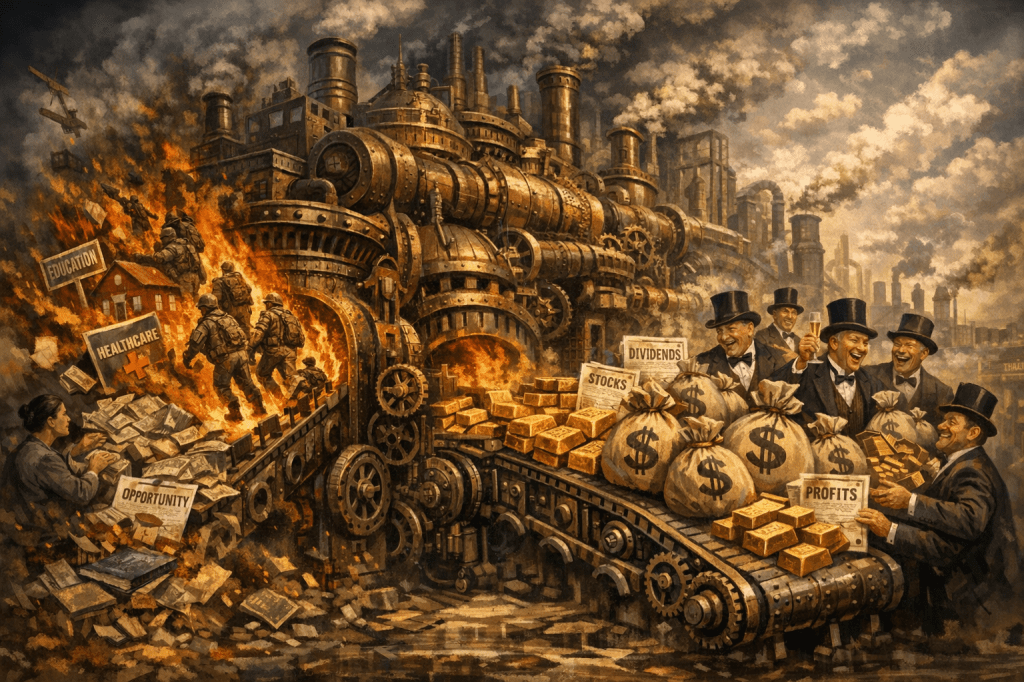
Jackson’s Rainbow Coalition was the high-water mark for Democratic progressivism. No other progressive Democrat has come as close to the kind of pro-labor, multicultural dream as Jackson.2 This is intentional. A pro-labor, cross-class, multicultural coalition for social and economic justice is anathema to the One Percent handlers of the current Democratic Party. Resources dedicated to lifting the poor, to paying living wages, to limiting off shoring, to building unions, to cleaning the environment, to making work pay, is money that the One Percent can’t squander on hedge funds and complex investment instruments that add nothing to the real world, but bloat investment portfolios with ephemeral paper wealth.
Therefore, a Jackson-like coalition will not be tolerated in the Democratic Party. Howard Dean? He got too exuberant during a primary speech, and his populist movement was ridiculed to death. AOC? She’s constantly under attack and marginalized by the Democratic National Campaign Committee. Despite being the most popular Democrat in the country, she can’t get a leadership spot on any committees. Zoran Mamdani? He ran one of the most dynamic progressive campaigns in Democratic Party history and won New York City hands down against establishment Democrats. Still hasn’t been endorsed by party leadership.
The DLC won in the 1990’s thanks to economic stagnation and a charismatic front-man. It was the worst thing to happen to the Democratic Party. Since then, establishment Blue Dog Democrats have dedicated themselves more to defeating “the left” and marginalizing progressives in their own party than they have to actually beating Republicans.
And here we are.
Where might that Rainbow Road have taken us? I wonder.


 The Mad Sociologist Blog
Leave a comment