


Open Borders Benefits Everyone
Note: This essay can be read as a stand-alone commentary, but it is a continuation of an earlier piece, the “Sociological Argument.” If you have not read Part 1, you can access it here. For the Substack version, Click Here. To stay in the Mad Sociologist Blog, Click Here

Introduction
The larger, sociological, anthropological, and moral arguments aside, the most significant push/pull factors encouraging human migration is economic. Maybe an individual human will migrate for individual reasons, curiosity, personal satisfaction, adventure. Humans in aggregate, however, migrate in search of resources. Consequently, no argument with regard to border policy, for or against open borders, can be adequately addressed without confronting the economic realities of human migration.
Fortunately, we already have a model that, if taken seriously, offers the best possible rationale for open borders. It’s called Free Market Capitalism.
When we are describing economic migration, we are looking at those who are seeking to maximize the exchange value for their labor. If a worker in Nation A makes $1 a day in exchange for his labor but can make $5 a day if he were to migrate to Nation B, doing so would be a rational economic decision. A world of open borders means that Nation B, willing to pay more for a given unit of labor, will be able to fill its needs as migrants fill open positions. Nation A, if it hopes to keep any labor at all, will be forced to raise its wages. It may not have to raise its wages as high as Nation B. It will only be necessary to raise wages enough to mitigate the relative benefit of taking the risk and taking on the costs of moving to Nation B.
Furthermore, there is little incentive for Nation B to lower its wages once it has enough workers or even a glut of workers to satisfy its labor needs. The $5 a day is a winning strategy. Also, employers in contemporary markets try to avoid cutting wages if they can, as doing so tends to negatively impact worker morale and productivity. Economist refer to this phenomenon as “sticky wages,” or lower downward elasticity of wages. Both Nations, A and B, benefit from the openness of borders. Nation B meets its productive capacity by filling its open labor positions, and Nation A benefits from high wages as employers must compete in a tighter labor market. Higher wages means more spending, leading to economic growth.
This is why Adam Smith was an advocate for the free movement of labor in opposition to the oppressive settlement laws of his time. He says, “…obstructing the free circulation of labour…from employment to employment, and from place to place, occasions in some cases a very inconvenient inequality in the whole of the advantages and disadvantages of their different employments.”
Of course, Smith was referencing the free movement of labor within a nation-state. However, his model does scale to the global level. It must. We hear all the time about the importance of liberalized international markets open to the ideal guidance of the Invisible Hand.1 Since the end of World War II, until quite recently2, the focus of the global market has been to open borders to almost all factors of production. Money can, of course, travel freely across national boundaries. Goods and even services can travel almost free across national boundaries. Manufacturing components can be assembled in one nation, travel freely across a national border to be incorporated into a larger good, then shipped to another nation to complete the assembly with almost no friction between national borders. The owners of these businesses can, with very little interference, travel freely from one nation to another to supervise production or enjoy some vacation time.
National borders are, for all intents and purposes, already open for every aspect of the production process.
Just not labor.
The consequence is a rather absurd economic arrangement. At the push of a button, money crosses the border freely to purchase a fidget spinner, which in turn crosses the border freely only to be spun and fidgeted for three days before being tucked in drawer and forgotten about. Meanwhile, the worker operating the mold machine for making the fidget spinner must wait years before he can cross the border with legal papers in his hands. A fidget spinner can travel with more liberty than a human being.
Not So Free Markets
This absurdity is a feature, not a bug.
When the economic elite talk about free markets, they mean that in a very selective way. What they mean is, they are free, but those who do the work must be constrained. This is no surprise. When economic elites are sitting around in Davos or the Bohemian Grove, talking about free trade, what they mean is the their own freedom and of their money, and their goods and services to travel across international boundaries. Not workers.
To understand this dynamic you need to know three things about an ideal modern capitalist system. In an ideal system:
- Capital is mobile
- Labor is mobile
- Labor will follow capital
It makes sense. If you are a worker, you want to go where the capital is because that’s where you are most likely to find your economic opportunities. The mass movement of farm workers from the countryside into the city is a provincial example of this phenomenon. At the international level we see this play out as nations like the United States, Canada, and the European Union are big draws for immigration from the global south. Labor will follow capital.3
Now, what happens when we change the ideal economic environment? What happens when capital is mobile, but labor is not?
This opens quite a few opportunities for the holders of capital.
To avoid economic jargonisms, I like to sort these opportunities into two categories. Over-thereing and Over-hereing.
Over-thereing is the practice by which labor intensive or extractive production is relocated to nations where these factors can be more effectively and efficiently exploited. These are often weaker and poorer nations desperate for investment into “economic development.” These nations have cheap, easily exploitable labor. Indeed, they are often patriarchal nations, consequently the labor being exploited is often young women. They are also nations with lax environmental, health, or safety regulations. Furthermore, they are also authoritarian nations that do not tolerate any labor organizing or direct action dedicated to upending exploitable conditions.
This is an inestimable benefit for big business. Having access to cheap labor while at the same time being able to externalize the costs of production by, say, dumping their toxic sludge in the rivers helps the corporation “control costs.” The costs are still there, of course. They are just paid by others. That the sludge and slave-like conditions are out of sight of the company’s consumer base is gravy on top. Out of sight, out of mind. We all understand that most of the products we enjoy are the fruits of destroyed cultures and child labor, but we are only confronted with this reality when there’s a 60 Minutes4 expose or special feature in The Times. Then there’s some brief social outrage and maybe even a boycott or two. Then in a couple of weeks, it’s on with our lives, swiping that “Buy Now” button on Amazon. Meanwhile, the threat of moving one’s production offshore is a powerful tool for keeping those pesky unions in line.
This doesn’t work if workers are able to pack their bags and go somewhere with higher remuneration and lower exploitation. No. Workers must be locked into the fetid factories and toxic mines. On the other hand, there is work in the home nation that does need to be done. Finding a way to do that work on the cheap is paramount. This fact incentivizes what I call Over-hereing. Namely, businesses can use closed borders to import workers without having to take on the added expense of respecting their rights as human beings.
How might this work?
Well, we the corporate elite spend lots of money to create the most absurdly inefficient immigration process possible. Ideally, this process will allow for a steady flow of immigrant labor, but will make the legal avenues of immigrating so arduous, so expensive, and take so long, that the most desperate people will find illegitimate means of getting across the border. Once they do so, they will be stamped as “illegal” people, bereft of human rights.
This is nothing new. It is an innovation on the feudal concept of the “outlaw.” The outlaw was not someone who flouted the law as irrelevant, as our current understanding suggests. No. Being an Outlaw in feudal Europe meant that you existed outside of the protection of the law. You had no rights. You could not sign contracts. Anyone could do anything they wanted to you without consequences, including taking your stuff, beating you, and killing you. Such a person became the slave of whomever would provide them with enough resources to survive. The outlaw dared not resist, lest he be turned out into the streets, turned over to the authorities, or just killed.
That’s very much the status of our undocumented immigrants. In desperation, the migrant comes to the United States but does so illegally. He or she has no protections. Very often, they are brought in by a company or are given contact information for a company that will hire them. Once they show up, they are locked into an exploitative system. They cannot go to the police or any other authority because they are “illegals” and fear that they will be imprisoned or sent back to destitution.
We see this pattern in many of our most difficult industries to find workers, construction, agriculture, meat production, care work. There is a return for bringing on undocumented immigrants. Such “illegals” with no protections cannot complain about the low wages and long, grueling hours they put in. Closed borders do not protect American workers by keeping out competition. Instead, they create an underclass of people without rights, ripe for corporate exploitation. It’s about as close to chattel slavery as companies can get without a 60 Minutes expose being done on them.
In a nation with open borders, where every human being standing within the nation’s boundaries are subject to equal protection under the laws, such exploitation is much more difficult5 to engage.
Policies such as those imposed by the Saggy Caesar’s Second Reich may profess to address this exploitation, but they don’t. By hardening the borders and openly attacking immigrants or immigrant seeming individuals, levels of exploitation can increase. The desperation of deep poverty doesn’t go away. The incentives for crossing the border are just as high. It’s the risk of being caught that becomes more dire, pushing undocumented immigrants further into exploitation.6
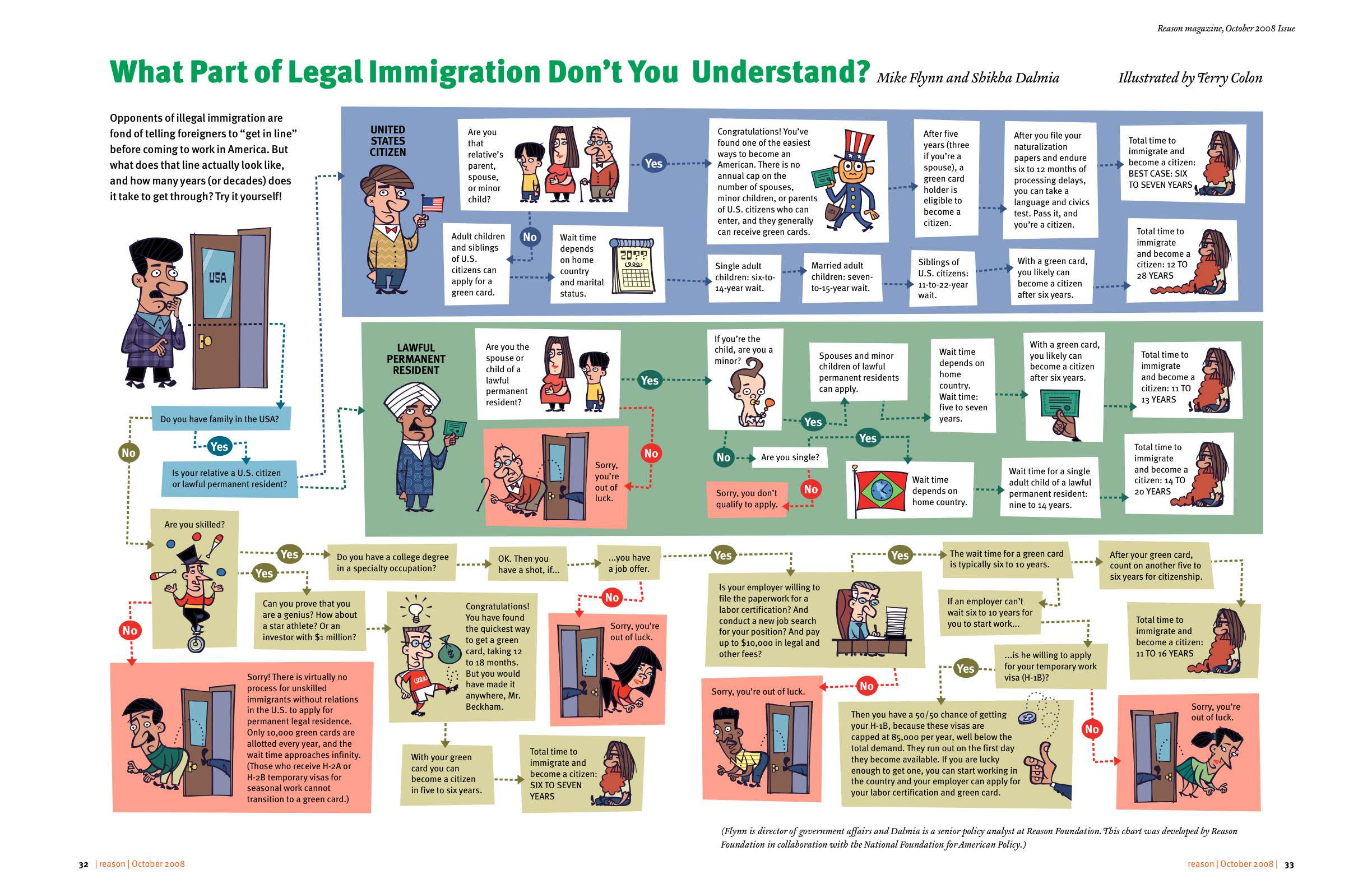
In the best of times, the free market advocates in the United States from both parties reveal the scam. It is virtually impossible for a poor person to immigrate to the United States in any reasonable amount of time. Now refugees and asylum seekers can legally cross the border if they are trying to escape political oppression, violence, or persecution…but not poverty. Poverty may be just as oppressive and destructive, even as deadly, as war and violence, but it doesn’t count. A person desperate to feed their starving family but cannot wait ten years to do so are left with few choices.
Even those who do acquire most visas, can only stay temporarily and are dependent on their employer for extending or renewing their credentials. In many cases, the immigrant may have to leave the country for weeks or even months before their visa is renewed. This means potentially losing jobs, rentals, and other important resources.
Any outside observer would look at this system and determine that it was designed to exploit the worker.
Open Borders is a Good Investment
The economic benefits of immigration have, by this point, been well elaborated by folks more knowledgeable and qualified on the subject than I. This essay is long enough without an elaboration of information that can be easily Googled. I will, however, include a quick survey of well established economic conclusions about immigrants and immigration. For details, you can see the Brookings’ Hamilton Project. You can also take a look at the CATO Institute.
- Immigrants improve living standards
- Immigrants are not a drain on the federal government
- Despite short term costs, the long-term impact of immigration on state budgets is also positive.
- Immigrants are less likely to engage in illegal activity and are not a drain on corrections or law enforcement
- Immigrants bring diverse sets of skills to the U.S. market
- Immigrants are more likely to start businesses and file patents than native born Americans
- Immigrants pay more in taxes than they receive in benefits.
- Without the contributions of immigrants, public debt at all levels would already be above 200 percent of US GDP—nearly twice the 2023 level and a threshold some analysts believe would trigger a debt crisis.” (CATO)
- Immigration actually has a positive impact on low education worker wages
- Immigrants do work at wage levels that American workers will not perform. Therefore, immigrant employment complements rather than competes with native employment
We already know this stuff. We’ve already used this data in our arguments with our anti-immigrant, Know-Nothing friends and family. They don’t care. For the Red Hatted Mouthfrothers, the economic arguments are irrelevant. They hate “those people” and want them gone.
Yet even the Red Hatted MouthFrothers can’t escape one simple reality.
The Baby Bomb!
The bottom line is that the United States and other western countries are running out of young people. At the same time, we have a glut of old people. We’re not popping out the babies, nor are we croaking like we used to. Currently, the median age in the United States is almost thirty-nine years old as opposed to under thirty in 1980 and under thirty-five in 2000. It’s projected to rise to over forty by early 2030…which is less than ten years away.
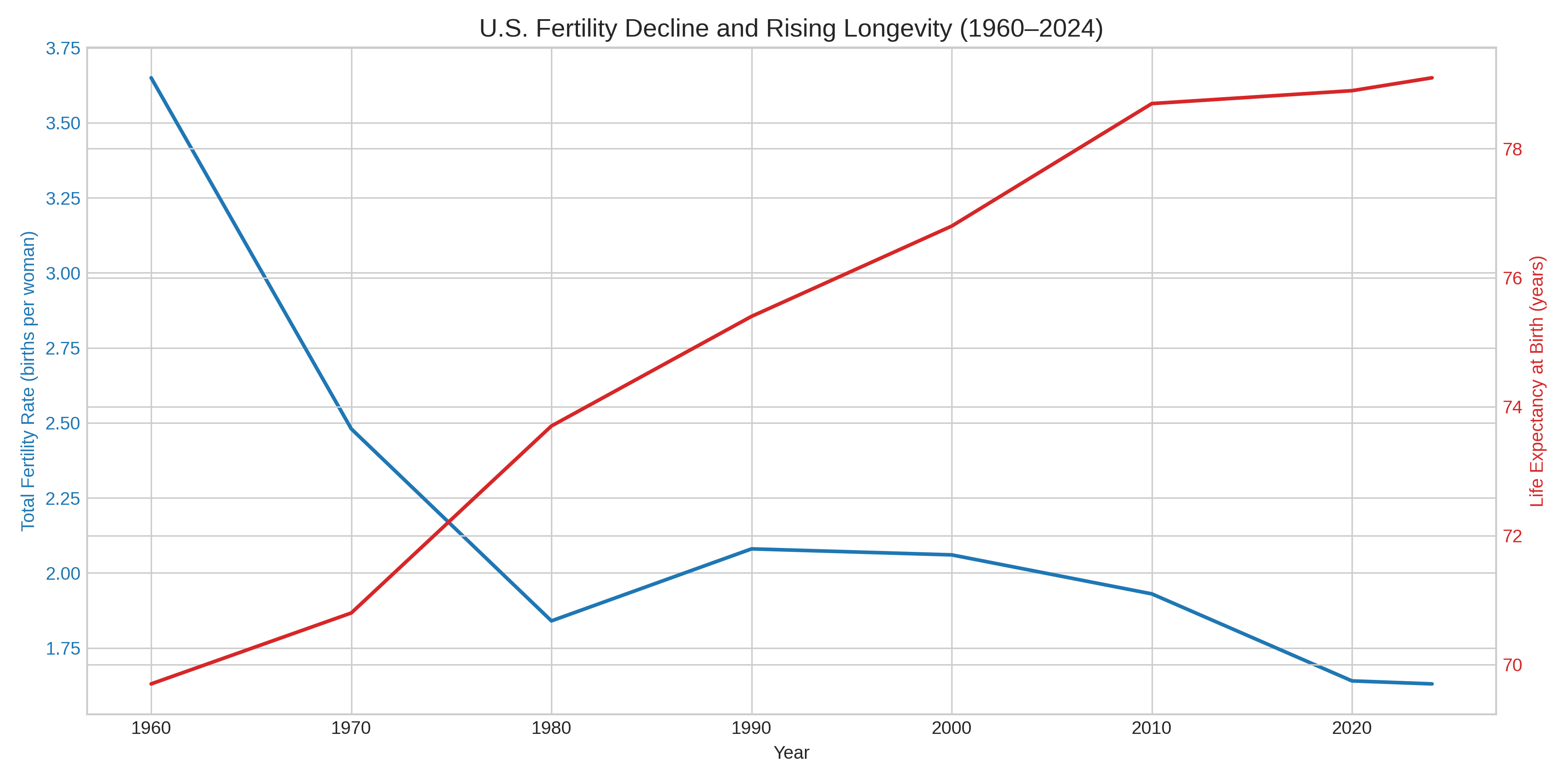
With this combination, there are just a couple of options. First, we can cut access to health care to bump up the mortality rate while at the same time stripping women of their reproductive rights, forcing them to submit to their husbands and pop out babies. Then we can cut retirement benefits like Social Security and Medicare, forcing people to wait until they are seventy or older before receiving these services. Of course, nobody wants that!7
Oh! Wait!
Nevermind!
Short of just Logan’s Running the old folk…which I’m against! Or forcing women to have babies they don’t want…again, anti! We need more young people. It’s unlikely that we will suddenly start making our own young people like the old days. Pro-natal policies don’t seem to help nearly enough to compensate.8
So, if we are not going to create our own young people, we’re going to have to import them.
Fortunately, there are millions of eager young people who are just itching to come to the United States and do the work that needs to be done. Millions are willing to do the work that Americans do not want to do. Many want to come here with their high educations and skills to combine them with our technological and academic resources to make a mark on the world. Young people at all levels of the educational and economic ladder want to come to the United States to help pay for our Social Security and Medicare.
I say we let them!
Let’s make it as easy as possible for young people to bring their skills, their imagination and creativity, and that beautiful youthful energy and vigor to the United States. We are in desperate need as is evidenced by our so-called “representatives” in national government.
Nor would opening our borders lead to being overwhelmed by ALL of the world’s young people. Remember, all countries are making economic decisions. All countries need young people. As young immigrants fill in our labor gaps in the United States, opportunities will decrease, making packing one’s bags and moving to Houston or Providence riskier. At the same time, countries with lots of disengaged young people will benefit from balancing their labor needs with youthful job holders. Once these countries start to experience a shortage of young people, wages and benefits will increase in order to keep them from emigrating. This will further balance the risk/benefit ratio of migration in favor of the nation of origin.
In other words, we can expect migration to regulate itself as if by an Invisible Hand!
Furthermore, lowering barriers to migration can be one of the biggest economic boons in human history. According to Michael A. Clemens in the Journal of Economic Perspectives, “When it comes to policies to restrict emigration, there appear to be trillion-dollar bills on the sidewalk.”9 Clemens notes that a survey of the research suggests that lowering migration barriers can lead to global gains of between “50-150 percent of world GDP.” That’s almost what Thanos was trying to accomplish with his stupid plan.
That we allow capital, goods, and rich folks to move freely across borders while acutely and even violently restricting able young workers from doing the same is wanton self-harm.
Time to Come Back to the Real World
The two essays of this series lay out a sociological and economic argument, with some anthropology and ethics thrown in, to support a policy of open borders. This was more than an academic exercise. I really believe that open borders is the ideal immigration policy.
However, I’m not Polyana on the topic. I understand that this is a minority position. A very small minority. Almost nobody is willing to entertain the argument that our borders should be open. Even when American borders were open, there was a great deal of political organizing around keeping “those people” out. It just turns out that the inheritors of that regressive philosophy have steadily gained political clout. They gained that clout not because their discourse is valid. It isn’t.
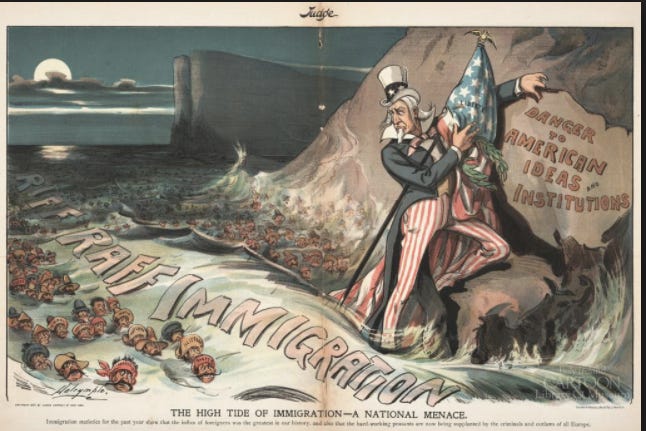
They gained clout because anger and hatred sells more advertising space than inclusion and tolerance. It’s no accident that restrictive immigration policies were enacted as communication networks became more efficient. Today, hate can travel all over the world into everyone’s palm at the speed of light. Algorithms by which this information travels are designed not in the interest of humanity and decency, but rather profit margins that favor hostility over civility. It doesn’t get more efficient than that.
Regardless, we all recognize that our nation and many Western nations are facing a “crisis of immigration.” Wealthy nations are really from the pressure of millions of migrants, fleeing poverty, environmental collapse, war, and oppression. This pressure will only increase with the growing population of refugees from hardship.
This is a mischaracterization. It’s not a crisis of immigration. It’s a crisis of the hateful backlash against immigration. Migrating to seek a better life is a normal, dare I say natural human drive. Racism is socially constructed. This mischaracterization, however, drives our immigration policy. At worst we have militarized borders and masked terror gangs throwing brown people into concentration camps. At best we have so-called liberals advocating more humane restrictions to natural human mobility. It’s a choice between active violence and passive violence—between the violence of the club, the chains, or the gun, and the violence of forcing people to remain in toxic environments. This is costing us in the area of trillions of dollars when that side of the ledger is elaborated properly.
Even if it is politically impossible to throw open the borders and allow human beings to exercise their natural right to move from point A to point B, it should be possible to create policy that is both humane and addresses the core concerns of our citizens.
Almost all citizens along the political spectrum admit that the goal is keeping out those immigrants who want to do us harm or commit crimes. Of course, it is impossible to accomplish this goal. The causes of crime are much more nuanced than just identifying the criminally inclined. Reasonable people understand that. They are not looking for the perfect prophylactic to immigrant crime. They are looking for a process, albeit imperfect, that they can feel comfortable with.
Open borders isn’t it.
That being said, it shouldn’t be hard to create a process that satisfies reasonable concerns. I can literally get a mortgage pre-approved in minutes on my cell phone with final approval happening in a few weeks. Certainly, we can cooperate with other nations to set up an efficient criminal background check system. With comprehensive datasets and biometrics, it’s absurd that it takes so many years for an able-bodied young person to immigrate into the United States. The whole process can be done in minutes.
Our quota and lottery systems are antiquated at best. If we can’t get rid of them, we can certainly improve them. We have tons of young people from underdeveloped and developing countries willing to come to the U.S. and work. In the meantime, not a lot of Norwegians are looking to migrate. A quota system that treats each as equal defies reason. It wouldn’t take much work, except for the whole racist “shithole countries” thing, to create a workable quota system.
We can streamline the process by making agreements with countries of origin to screen potential emigrants before showing up at the U.S. border. Prospective migrants can pre-load their background and health checks, validating their identities biometrically, then show their certifications at the border. Once a prospective migrant is vetted, entering the country will be no more complicated than getting into Disney World.
Meanwhile, we can streamline the asylum and refugee process for those whose nations prefer to hold them hostage or lack the resources to effectively pre-load the required data. First, let’s include poverty with the list of qualifications for asylum. Secondly, hire more magistrates and social workers and immigration attorneys to get the job done efficiently. Again, it’s not like there aren’t enough people to do this work. We can pay for this with the $80 billion dollars or so that ICE will no longer need.
The greatest contributor to people coming to the United States without getting the appropriate documents is just how difficult it is to get the documents. Making this process easier will incentivize those coming to work and contribute to avoid the risk of illegal entry and do so legally. According to the rhetoric I hear from the right, this is what they want. They are not opposed to “those people.” They just want those people to come here legally.10 Creating a more efficient process for immigrants to come legally will not mitigate their real concerns, of course. It will, however, deny them a rhetorical excuse for their hatred.
Our current border policies are indefensible from any reasonable position. As our government descends into fascism, these policies have descended even further into barbarism and violence. To institute real immigration reform requires us to marginalize the bigots, and to build a voting bloc demanding rational and humane policy. As much as I’d love to see the borders opened, that is unlikely to happen. I accept that. There is no reason, however, that we cannot do much better than what we have today.

Holy crap! You read the whole thing? You need a subscription!
…and you need to share!
Footnotes
- It’s important to point out that our understanding of the Invisible Hand as the self-regulating principles of a market unencumbered by government regulation is not how Smith himself used this term. That’s a story for another day. ↩︎
- The Saggy Caesar’s archaic tariff policy. ↩︎
- Which is only a problem when we factor in good, ol’ fashioned racism. When the labor that is following capital involves brown people moving to “white” nations, economics be damned! ↩︎
- And Bari Weiss will take care of this. ↩︎
- That’s not to say “impossible”. Just more difficult ↩︎
- This flies in the face of current executive policy of sealing the borders and attacking immigrants to the point that they are afraid to go to work. How can I explain this policy in light of the economic motives described in this section. Well, that’s simple. The Saggy Caesar’s immigration policies have nothing to do with economics. It’s a racist policy. ↩︎
- Anyone see Logan’s Run? ↩︎
- Caldwell, John C. 2006. “The Western Fertility Decline: Reflections from a Chronological Perspective.” Journal of Population Research 23(2):225–242. ↩︎
- Clemens, Michael A. 2011. “Economics and Emigration: Trillion‑Dollar Bills on the Sidewalk?” Journal of Economic Perspectives 25(3):83–106. ↩︎
- It should go without saying that they are full of shit. ↩︎



 The Mad Sociologist Blog
Leave a comment