

ON STANDING UP AGAINST THE VIOLENCE CYCLE
Fear, Hatred and Violence after 9/11
I was not a popular person in 2001.
In the face of the horrors wrought by the attack on our country and the deaths of thousands of our fellow citizens on 9/11 the cry for war was overwhelming. We were attacked by a foreign power on American soil. They showed our vulnerability, humiliated us, shattered the delusions that come with power. We needed to show them, show the world, and affirm for ourselves, that we are strong, that a trespass against us will be answered by devastating violence.
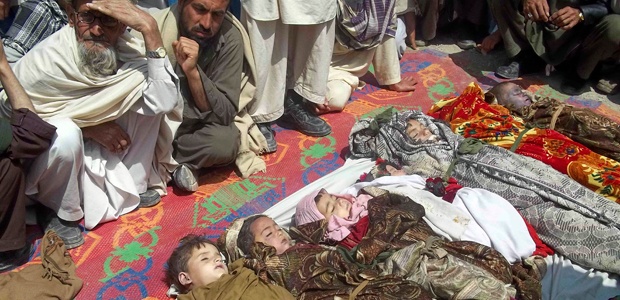
The enemy was identified. Our massive war machine was engaged. An otherwise unpopular president waved the bloody shirt to galvanize the nation to action. The might of the nation focused on Afghanistan, already ruined after years of warfare and civil strife. Regardless, Afghanistan would be bombed “back to the stone age” for the crime of giving shelter to an organization that shed our blood. Our blood has been shed, therefore someone must bleed.
We would meet barbarism with barbarism2.
I was not part of that consensus. I did not clamor for war. I openly and publicly opposed the emerging war in Afghanistan as well as the larger program against terrorism.
Every effort was made to paint me and those like me as pacifiers, as “on the side of the terrorists,” as “hating America.” President Bush may have been looking directly at me when he announced, “Either you are with us, or you are with the terrorists.”
It was a lie. A destructive lie.
Those who were not swept up in the war fever weren’t less impacted by the attack. There was nothing special that made us immune to the anger, rage, sadness, and fear resulting from watching our fellow citizens murdered. Indeed, I might argue that we were even more impacted. So much so that we were morally averse to inflicting this kind of pain on innocent others regardless of a presumed need to strike back.
Those of us who opposed the grinding treads of the American war machine understood one categorical truth. We understood the cycle of violence. Violence sows fear. Fear engenders hatred. Hatred encourages violence. Violence, fear, and hatred cannot disrupt the cycle any more than heat, oxygen, and fuel can snuff a flame. They are the chemistry of war of which terrorism is a tactic.
Knowing this meant holding to a categorically moral position. Terror cannot be countered by war because war is terrorism. There was no reason to believe that Afghans would respond differently than Americans upon witnessing the blood of their countrymen being shed. Violence sows fear. Fear engenders hatred. Hatred encourages violence. This is as categorical a truth for Afghans as it is for Americans.
Unfortunately, our response was not measured by this categorical truth, but rather by Contingent Morality. Violent circumstance required violent action. Evil done unto us justifies equal or even disproportionate evil upon others. That most of the victims of this evil had nothing to do with the initial injustice is just an unfortunate consequence–collateral damage in military parlance. Contingent Morally does not require the nuanced arguments necessary for confronting an categorical truth. After all, its adherents do not need to be convinced. They want only to legitimize their visceral reactions. Furthermore, being in the majority alleviates a significant amount of moral pressure regardless of virtue.
There was a great deal of pressure on us to conform to or acquiesce to bloodlust. We were insulted, screamed at, called cowards or complicit. Every effort was made to silence us when we wouldn’t conform or acquiesce. I was a regular guest columnist for my local newspaper…until I started submitting anti-war essays. Then I was cut off. Parents whose children were in my school lobbied my program director to fire me or to forbid me from holding class discussions about the war, claiming that I was indoctrinating their children with my left-wing bias. Teachers who supported the war, of course, were not considered biased, and their lessons were not presumed to be indoctrination.
One is only biased when holding a minority opinion.
The consequences speak for themselves. Those of us in the minority were right. Twenty years of war in Afghanistan came with incomprehensible costs. When the tangential consequences are accounted for, the spread of instability, the refugee crises, the economic costs, millions of lives have been lost, uprooted, and immiserated. Violence did not dissuade further violence. As Jennifer Walkup Jayes concludes in a report1 for the Watson Institute at Brown University, “Military force, however, has rarely been successful in ending campaigns of terror. Robust alternatives to the war paradigm for counterterrorism exist and have been successful around the world.”
Violence sows fear. Fear engenders hatred. Hatred encourages violence.
Fear, Hatred, and Violence in Response to 10/7
A few years back, I participated in a March in support of Palestinian victims of Israeli oppression in Gaza and brutal dispossession in the West Bank. This march was a response to one of many disproportionately violent reactions on the part of Israeli forces to civilian Palestinian resistance to the Gaza lockdown. I can’t remember which one. Two million people in Gaza were and remain subject to an Israeli siege, what human rights organizations universally condemn as the world’s largest open-air prison.
Meanwhile, the Israeli government continued to expand its illegal occupation of the West Bank, dispossessing thousands of Palestinians. B’Tselem, an Israeli human rights organization claims, “Israel has created in the Occupied Territories a regime of separation based on discrimination, applying two separate systems of law in the same area and basing the rights of individuals on their nationality. This regime is the only one of its kind in the world, and is reminiscent of distasteful regimes from the past, such as the Apartheid regime in South Africa.”
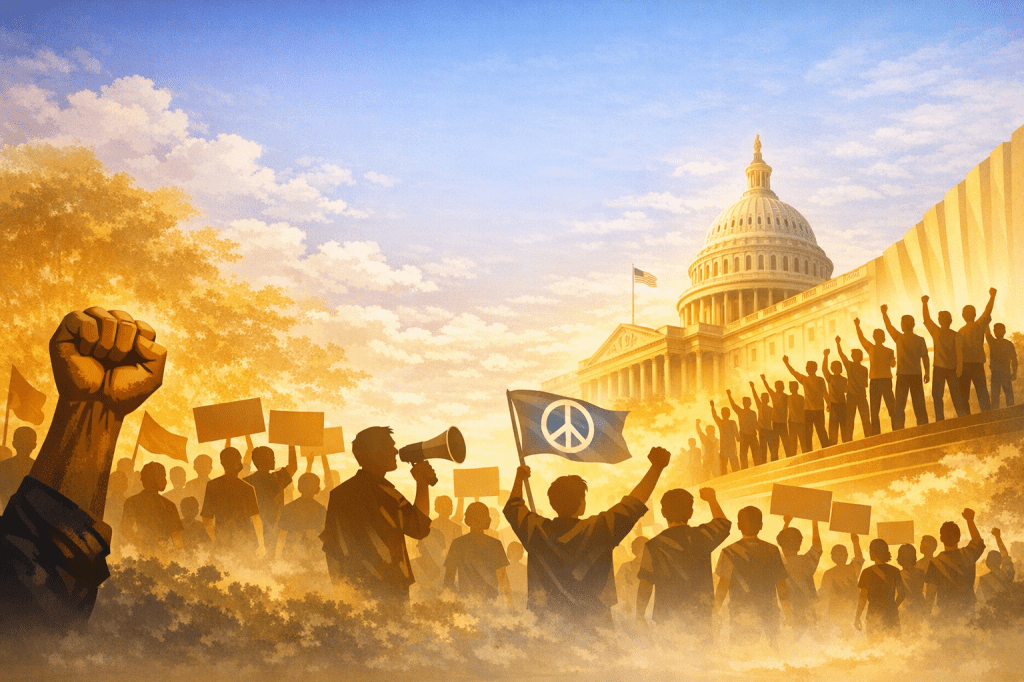
The day of the march I took my turn at the megaphone and announced my intentions for participating. I stated that I was there not just to struggle for the rights of an oppressed people, but also in the interests of Israelis who lived in fear of violent retaliation, a return of the Intifada and Jihad. I pointed out that a just and humane settlement between Israelis and Palestinians was to everyone’s benefit. Only a just and democratic peace could protect the people of the Levant regardless of religion, ethnicity, or cultural history.
I can’t speak for everyone in attendance on that day. I feel, however, that the last thing most of us wanted was for Hamas or any other militant group to butcher and kidnap anyone, let alone innocent people going about their daily lives. We wanted justice for Palestine, security for Israel, and peace for all involved. Nothing could set the Palestinian cause back further than a terrorist attack against Israel.
Because violence sows fear. Fear engenders hatred. Hatred encourages violence.
The lofty goals of that march lay smoldering, charred to the point where no one can even imagine what they looked like before they were incinerated in the passions of war. The ruins of Contingent Morality catch and hold the flames of hatred and bigotry. Hamas did this.
There is no doubt that Hamas, outraged by the Palestinian plight, the continued abuses, the appropriations, and deprivations at the hands of the Israeli state felt justified in lashing out violently.
But they weren’t.
Violence sows fear. Fear engenders hatred. Hatred encourages violence. This is a categorical truth.
The Israeli state, of course, feels justified in its brutal response, suffering not just the pains of violence, but the humiliation of victimhood it demands blood against the “human animals” who would dare attack them as well as those who countenance such attrocities by their inaction. They must react to the fear and hatred sown by brutal terror.
The Israeli state is wrong. Violence sows fear. Fear engenders hatred. Hatred encourages violence. This is a categorical truth.
Unfortunately, neither side has anyone with legitimate authority who can stand up and say “Stop this!” “We cannot go on killing our fellow human beings! Because Violence sows fear. Fear engenders hatred. Hatred encourages violence. This is a categorical truth.”
The current status quo by which a segment of Palestinians are held in the Gaza Prison while another segment is slowly dispossessed in the West Bank, cannot be sustained. Palestine will resist, and Israel will react, and everyone will ends up living in fear and hatred…and the categorical truth that is the outcrop of this fertile, fetid field can only spawn poison fruit.
As it stands, there are and have only ever been two possible outcomes to the Israeli/Palestinian conflict. The optimal outcome is that it ends, and Israelis and Palestinians learn how to live together if only with an uneasy peace. Might this be a two-state solution? One-state pluralism? An emergent mutualism? It does not matter. This is the only morally legitimate outcome.
This outcome is now buried in bomb craters and imprisoned in terrorist tunnel networks. Is there anyone at this point who can imagine and reasonable, humane settlement.
The other outcome is ethnic cleansing. One people is purged from the land leaving the other to exist in a perpetual state of shame–indicted by history. As Minister Ariel Kallner stated, “Right now, one goal: Nakba! A Nakba that will overshadow the Nakba of 1948.” Meanwhile Palestinians call for liberating the land “from the river to the sea.” This is the language of genocide.
Those are the options. Pluralism or Genocide.
In the face of fear and hatred and violence most ruthless on both sides, it appears that the pendulum is swinging toward genocide.
It is right to be against this. It is right to remind the world that violence sows fear. Fear engenders hatred. Hatred encourages violence.
There are those who will try to silence this categorical truth, who will claim that pointing this out is anti-semitic, or abandoning Palestine. They will try to define one genocide as acceptable over the other and insist that we choose. We will, as always, be under incessant pressure to embrace a contingent morality that validates “our” attrocities against those people based on their attrocities against “us.”
We know they are wrong. There are not “those people” as opposed to “our people.” There are only people. People like you and me, who are motivated by the same categorical truth. Violence sows fear. Fear engenders hatred. Hatred encourages violence.
It is right to refuse this false dichotomy and continue our quest for a humanist and democratic pluralism by which both Israelis and Palestinians can live. We must hold tight to this goal as impossible as it is to visualize its reality at this bloody point in time. It is the only morally defensible position.
Click here to read Part 2: On Ending the Cycle of Violence in the Real World
Notes
- See below ↩︎



 The Mad Sociologist Blog
Leave a comment