

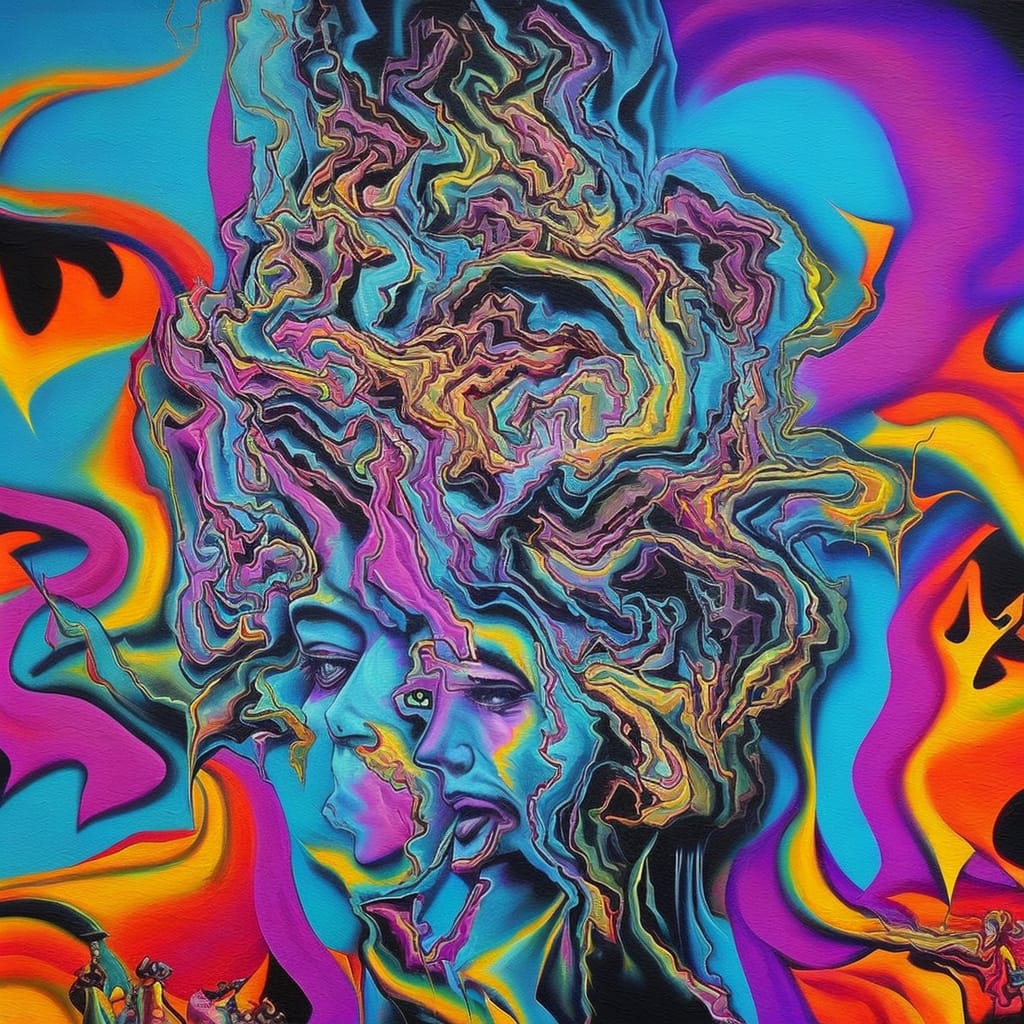
WHAT HAPPENS WHEN THE SOCIAL CONSTRUCT BREAKS DOWN?
A big part of promoting and preserving democratic goals is understanding how social crises like economic recessions, natural disasters, pandemics, technological displacements, and other sources of social stress, might create fissures by which authoritarians can undermine the superstructure. In doing so, authoritarians can build their political blocs, discredit important knowledge structures, and impose their own regressive vision of social order on what used to be a democratic society.
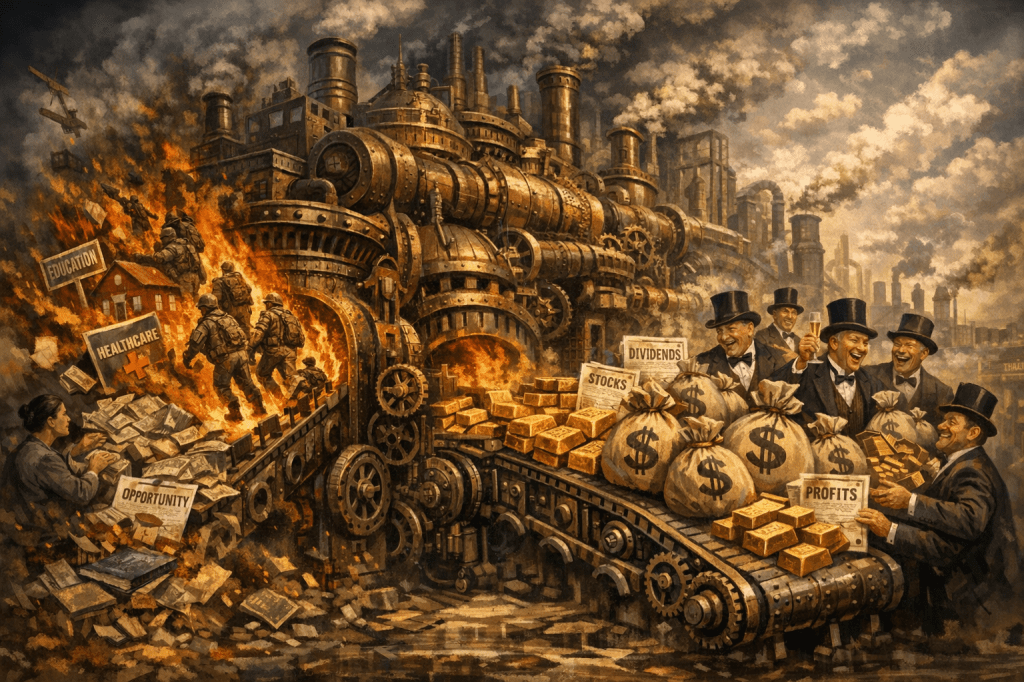
When they Really Came for the Teachers (May 31, 2023 MSB)
A society, a nation-state for instance, is at its core a collective story that its members accept and share. It’s a reciprocal process. As members, we not only hear this story, but we experience it. We incorporate some portion of it into our individual consciousness by which this collective story becomes some part of our personal identities. I am an American. That means something. The Boston Tea Party, The Constitution, Fourth of July, standing for the National Anthem, Gettysburg, World War II–these are all elements of the story, symbolic plot lines, that help construct the individual that I am.
Individuals also contribute to the story, almost all of us in small, local ways. We raise our kids to accept the story…sometimes with modifications, but rarely with outright rejection. We reify the story by participating in the requisite rituals like voting, saying the Pledge of Allegiance, flying the flag.
Others, like celebrities and public personalities, have large platforms by which they can participate in and shape our social stories. Some of us just have humble blogs!
Sometimes we challenge assumptions made within the story about what it means to be a real American, and we question the values derived from the story. Americans, for instance, aren’t all white…and we are not always right and just. Regardless, few of us flat-out reject the basic premise of the larger story. Almost none of us will come forth and claim, “I am no longer an American,” or even “I hate America” once we’ve embraced and participated in the larger story. At most, our personal stories start with, “I’m a proud American and I love my country, but…”
No matter how we incorporate the larger social story into our identities the story itself is central. This story is the central component of who we are, collectively and individually. It’s sincere, not cynical. Indeed, a larger, unifying, social story is an essential component of our sense of self. Our very psychological well-being rests on how effectively the stories we tell help us shape our lives, help us interact meaningfully with others, help us make sense of our lives.
Social stories, especially the overarching societal story, are so important, that the entire field of sociology is dedicated to understanding it. If you are a sociologist, you have dedicated your life to deciphering and deconstructing this story and analyzing how these stories shape human behavior…that’s why you are so dangerous. Sociologists have lots of highfalutin terms for this story: Rhetorical Formations, Value Consensus, Collective/Common Consciousness, Discourses, Paradigms. Probably the most popular of these phrases is “Social Construct.” All of these terms amount to the same thing, social stories.
Social stories, and our species that depends on them, exist with certain inherent tensions. Humanity is that dependent species. Thousands of years of philosophical reflection is dedicated to understanding the meaning of life, what it means to be human. When we study these things we tend to focus on the “life” part, or the “human” part. Really, it’s the “meaning” part of the question that is central to the human experience.
If there is an underlying human nature it is that human beings seek meaning. We do this intrinsically upon our first sensate awareness. What does a touch mean? What do these feelings in my belly mean? There are other beings who feed me and keep me warm and tickle me…they make sounds…what do those sounds mean? We find these meanings in stories. Human development from infancy is one of increasingly complex stories that allow us, with our impossibly complicated brains, to exist in the world. The stories we embrace to make sense of endless sensory inputs being interpreted and sorted in impossibly complex neural networks that compel our understanding of the world and our role in it keep us balanced and grounded in reality.
Furthermore, these are stories. By definition, they are creative endeavors as well as interactive rituals. Stories are meaningful because they are shared and reflected back on us. They become how we make sense of ourselves. They become the way we relate to others. They become binding. The stories we tell define the communities in which we live. Social stories are what make us human. We cannot exist as individuals without them.
Yet, social stories are tenuous things. They exist only in our minds, and in our relationships. They exist on a gossamer plane intersecting our experiences, our contemplations, our dreams, and the real universe which cares little about our experiences, our contemplations, our dreams. So, the primary tension of social stories is that between how we experience and participate in the stories we tell about ourselves, and the real, consequential world that we inhabit. And the real world does not negotiate.
Our stories don’t have to be true. They don’t have to be realistic. A world of fairies and nymphs is just as meaningful as one of electricity and digital communication. If the stories we tell help us navigate the real world and form reliable relationships, then they are meaningful–they are real in their consequences.1
Secondly, stories are, by definition, reflexive. There is a teller and an audience. Relationships are built upon aligning personal stories between individuals. Throughout most of human natural history the stories we told only had to bind a small number of people. Tribes, clans, and relatively small villages were the discursive limit for almost all of humanity. This is reflected in Dunbar’s Number,2 the natural limit of human friendship groups is no more than 150, with only five members sharing deeper stories that we call “intimacy”. Emile Durkheim would concur. “In a small society, since everybody is roughly placed in the same conditions of existence, the collective environment is essentially concrete…the states of consciousness that represent it are therefore of the same character.”3
As history has developed, however, human beings find ourselves telling stories that bind millions, even hundreds of millions of us together. This has become possible because of advances in transportation, from roads like the Via Apia to jet aircraft, and in communication, from written language to satellite networks and the internet. Today, social stories can bind more people over a larger geography than ever before.
This most amazing human innovation, however, does not come without a cost. The more people involved in the telling and the performance of social stories, and the more diverse the influences on those stories, necessitates greater flexibility in how the stories are told, and how the stories are heard. The stories we tell may influence more and more people, but in doing so they tend to become less binding as individuals can now pull from almost endless stories to help them shape their lives. It’s like pizza dough, the wider it’s spread, the thinner it becomes until one can see through it…and it breaks.
Since graduate school, I’ve been interested in how social stories bind communities and influence our behaviors. Initially, I was interested in how to help troubled young people change their individual stories in the face of real-life challenges so that they could lead happy, fulfilling, and socially healthy lives.
I’ve also become interested in how stories are used to establish, perpetuate, and reinforce power relations. After all, if human beings are motivated by stories…and we are…then who is telling these stories, and toward what end becomes important if we are to sustain a common democratic story.
In essence, I’m interested in what happens when the stories we tell, the established social constructs, break down in the face of the tensions inherent in contemporary human relations. What happens when the social constructs no longer align with real lived experience? What happens when the social stories become too thin because they try to incorporate too much diversity, or they are challenged by those constrained rather than liberated by the accepted discourse?
Tentatively,4 I’ve referred to this condition at the human level as social schizophrenia. That is a state of confusion experienced by individuals who can no longer find or have lost their sense of meaning in established constructs. Social schizophrenia is, to my mind, a destructive state in which individuals can no longer function as effective social actors. They may experience social isolation, an inability to interact effectively, and all of the physical and psychological maladies that come with it. They also become vulnerable to those individuals and social institutions who might cynically exploit the schizophrenic individual’s desire for meaning. Such individuals can be recruited into participating in destructive social movements that harm millions.
I think (hypothesize?) the contemporary era is marked by a widespread sense of social schizophrenia. In the passage quoted above, I refer to “fissures” that undermine the “superstructure” (clear Marxist rhetorical formations). This term may have been an apt metaphor, but not particularly clear sociology. What exactly is this fissure in the superstructure? In essence, these fissures are discursive. They are a breakdown in the social stories that would otherwise bind us to a common identity.
As such, I think it’s a worthwhile endeavor to elaborate on these fissures and the consequent social schizophrenia. It’s my goal to examine this concept on the Mad Sociologist Blog going forward in yet another5 ongoing project.6
Notes
- Reference to W. I. Thomas’ Theorem
- Dunbar’s Number
- Durkheim, Emile. Division of Labor in Society
- This idea of Social Schizophrenia has been with me for a long time. Obviously, I’m playing against a metaphor of real schizophrenia in which an individual’s ability to interpret reality is so distorted as compared to the norm that he/she finds normal interaction and social functioning impossible. Social Schizophrenia can be defined as the confusion resulting when established social constructs are inadequate for understanding real-life experience. Sociologists take social constructs for granted. But the world is not a social construct. It is a real construct. Through social interaction, the stories we tell, we learn how to understand the real world. Human beings, however, do not passively accept the social construct in the face of contradictory experiences. So how does this breakdown work in real life? Well…I’m not sure, but I think it’s worth exploring.
- I think I have enough observations to start constructing a theory.
- Oh, for God’s sake, not another Mad Sociologist Project. You haven’t finished all the other projects yet! I know. I’m easily distracted by shiny objects. I will deliver on the earlier projects…but I gotta be me.

 The Mad Sociologist Blog
Leave a comment